Tuesday, February 18, 2020

Locusts swarm into crisis-hit South Sudan as plague spreads across east Africa


Invasion is further food shortages in country struggling with drought and legacy of civil war 


Reuters

Swarms of locusts ravaging crops and grazing land across east Africa have reached South Sudan, already reeling from widespread hunger and years of civil war, the country’s agriculture minister said on Tuesday.

Kenya, Somalia, Eritrea and Djibouti are battling the worst locust outbreak in decades, and swarms have also spread into Tanzania and Uganda.
Desert locusts can travel up to 150km (95 miles) in a day and eat their own body weight in greenery, meaning a swarm just one kilometre square can eat as much food as 35,000 people in a day, according to the United Nations.

The invasion is worsening food shortages in a region where up to 25 million people are suffering after three consecutive years of droughts and floods.

Meshack Malo, South Sudan’s representative for the UN’s Food and Agriculture Organization, said the locusts were mature and looking for breeding grounds that would form the basis of the next grounds that would form the basis of the next major infestation.

“These are deep yellow, which means that they will be here mostly looking at areas in which they will lay eggs,” he said.
Teams planned to mark the place where they lay eggs and then come back to kill the young insects in 14 days, he said, since poisoning the eggs in the ground could damage the soil.

At least 2,000 locusts had crossed the border, he said. During each three-month breeding cycle, a single locust can breed 20 more, giving rise to the massive swarms that are now threatening crops on either side of the Red Sea.

Oil-rich South Sudan is recovering from five years of civil war that plunged parts of the country into famine in 2017 and forced a quarter of the population to flee their homes. In December, the UN’s World Food Programme said the food security outlook was dire after floods affected nearly a million people.

Thanks for reading. Follow the page and Share it.

CNN states why Nigeria should be excluded from Trump’s travel ban


By Tope Templer Olaiya

A report by Zakaria on the immigrant visa ban imposed on Nigeria by the Donald Trump administration trended yesterday on social media.

A top American journalist with CNN, Fareed Zakaria, has analysed why the recent decision of the United States government to impose immigrant visa restrictions on Nigeria “does not make sense.” 

The US government had justified the restriction on the basis of national security concerns, claiming that the affected countries have gaps in their security protocols surrounding travel which exposed the US to terror threats. 

A report by Zakaria on the immigrant visa ban imposed on Nigeria by the Donald Trump administration trended yesterday on social media. The presenter of a weekly programme on CNN, GPS, made a case for Nigeria, saying US authorities justified the ban with national security concerns but data available proved otherwise.

Citing CATO institute, Zakaria said four of the six countries listed in the ban – Nigeria, Myanmar, Tanzania, and Eritrea – had no records on terror-related deaths caused by foreign-born attackers between 1975 and 2017. “The argument does not really make sense”, he said. 

He added that Nigerians are the most educated immigrants from sub-Saharan Africa in the US of which 59 per cent aged 25 and older have at least a bachelor’s degree, according to migration policy institute, which is nearly doubled the proportion of the Americans born in the US (33 per cent).

Zakaria argued that if the government was truly worried about security from the countries, it would ban all visas, not just immigrant visas. He said the government’s decision to target only permanent visas, leaving the temporary visas, suggests something else is going on. According to him, when Trump unveiled the new immigration plan in 2019, he said he wants English speaking immigrants who could assimilate easily and give back to the country. 

Zakaria said if that is what Trump wants, Nigerian immigrants who make up the largest group of Sub-Saharan Africans in the US as of 2017 “check all those boxes. They are some of the most educated immigrants in America. Nigerian immigrants tend to work high skilled jobs, 54 per cent are in largely white-collar positions in business, management, science, and the art compared to the 39 per cent of people born in the US,” he added.

This, according to Zakaria’s analysis, means that Nigerian immigrants have significant spending power. 

The American journalist also cited a new report by the New American Economy, which states that Nigerian immigrants in the US in 2018 made more than $14 billion and paid more than $4 billion in taxes. The report also states that Nigerian diaspora around the world sent back almost $24 billion in remittances, contributing to the Nigerian economy that is “more dynamic than many people, including Trump himself realise”.

According to the journalist, the Centre for Global Development reported that Nigeria is a country where the middle-class is increasing in education and aspiration. It is also America’s second-largest trade partner and the US wants to double its investments and trading in Africa. 

President Donald Trump had some weeks ago extended the country’s controversial travel ban list to impose visa restrictions on six more countries. Nigeria, which happens to be the largest economy in Africa and the most populous nation on the continent, was included in the list. While the Trump administration included Nigeria on the travel ban list to keep America safe from terrorists, CNN report concluded that the decision was not smart.

Thanks for reading. Follow the page and Share it.

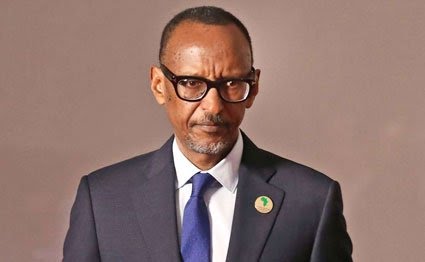
Rwandan President Kagame hints at firing more ministers


He accused the ministers of lying, carelessness and indiscipline.

Rwanda's President Paul Kagame has hinted at firing more ministers. 
Rwanda's President Paul Kagame has hinted at firing more ministers in the coming days, accusing them of lying, carelessness and indiscipline.

At the Leader’s Retreat on Sunday hosted at the Gabiro Military Training Centre, Kagame warned that some officials “could be next”, following the firing of three top officials over the last three weeks, among them Minister of Health Diane Gashumba.

Dr Gashumba, who has served as Minister of Health since 2016, was sacked on Friday evening following “a series of habitual gross errors and repeated leadership failures,” the Prime Minister’s Office announced.

But speaking at the National Leadership Retreat, President Paul Kagame accused Dr Gashumba of lying to him about the availability of kits to test individuals for the deadly Coronavirus, Covid-19.

“One morning, I called one of the leaders and the Prime Minister about the Coronavirus and asked that they examine each one of us ahead of the Leader’s Retreat. I told them to tell the minister of health to ensure this.

“She responded that we have 3,500 kits, and that using 400 of them to test leaders would seriously deplete the number of kits we have. The person I sent told her that the message is an instruction, and that if she has objections she should call me.

“Later we discovered that we do not have the kits as she said. We have kits for only 95 people and not 3,500. I asked her about this and she started giving excuses in a long story. You leaders, you cannot even speak the truth; how do you expect to solve problems?” President Kagame said.

He then accused former State Minister for Education, Isaac Munyakazi, of accepting a bribe of Rwf500,000 (about $550) to doctor school rankings.

“Munyakazi met officials of some school that had been ranked last and they asked him to rank it among the top schools. He complied by putting the school among the top schools. He was awarded just Rwf500,000 for it. If I had not fired him, he would be here with us and none of you would come up to ask me why. That is how you have normalised bad behaviour,” President Kagame told the officials.

He said he sacked the Minister for Justice, Evode Uwizeyimana, for displaying “bad manners on several occasions."

“Evode parked his vehicle in a place that people are not supposed to park and then tried to enter a building without being checked. The security guard followed him and politely told him that he must be checked but he instead beat her and threw her to the ground,” President Kagame said.

“But it was not the first or second time. This is how he has been conducting himself and some of you knew this and you were quiet about it. You had shown him that he could get away with such behaviour. Which kind of people are you?”

President Kagame has hinted that more officials could be heading out the door.

Among the embattled ministers include Minister of Defence Major Gen Albert Musasira and Minister of Internal Security Gen Patrick Nyanvumba.

The President said the two ministers must explain a case regarding the state of national hospitals and warned that they could also be on their “way out”, without divulging further details.

In December last year, President Kagame fired Ms Seraphine Mukantabana, former chairman of Rwanda Demobilisation and Reintegration Commission, over mismanaging the commission. Mr James Musoni, a long-serving top official, was dismissed as Minister of Infrastructure in March 2018.

Mr Musoni, however, returned to government in October last year when he was appointed ambassador to Zimbabwe. In October 2018, President Paul Kagame sent home four senior officials for "gross misconduct" and also sacked an entire unit at the Ministry of Health for “wasting public resources”.

Thanks for reading. Follow the page and Share it.
Monday, February 17, 2020

Rand falls: Moody’s warns investors about South Africa's economy


A downgrade by Moody's could generate outflows from South Africa's bond and stock markets.


by Robert Brand


South Africa's rand weakened and bond yields rose after Moody's Investors Service lowered its forecasts for economic growth, raising the risk the country may lose its last investment-level credit rating.
The rand declined as much as 0.7% to trade above 15 per dollar for the first time in a week. Yields on benchmark 2030 government bonds rose four basis points to 8.9%.


Moody's, which is scheduled to review South Africa's Baa3 credit rating in March, said the country's lackluster economic performance was due to domestic challenges rather than external factors such as the coronavirus. A downgrade by Moody's would see South Africa lose its place in investment-grade indexes, sparking outflows from its bond and stock markets.

"Markets are betting that this could be a precursor to a downgrade into junk at the March review, which follows next week's budget," said Christopher Shiells, an analyst at Informa Global markets in London. "However, the Treasury may be able to buy itself more time with a statement that outlines credible steps toward fiscal and general economic reform."

Recent economic indicators suggest that industrial activity in South Africa remains weak amid low business and consumer confidence, while recurring power outages have weighed on manufacturing and mining output, Moody's said in a report. The company lowered its forecast for gross domestic product growth to 0.7% in 2020, from 1%, and predicts expansion of just 0.9% in 2021.

"Slow growth of economic activity is hampering the rate of jobs creation," Moody's said. "Our sub-1% projections reflect our view that the pace of economic activity will remain subdued, well below the country's potential, over our forecast horizon."

Tight Policy

South Africa's relatively high real interest rates are bolstering the rand while constraining economic growth, Moody's said. While the central bank reduced its policy rate by 25 basis points in January, the real rate, which adjusts for inflation, remained above 2%, higher than the GDP growth rate.

"It's not a huge surprise," said Paul McNamara, a fund manager at GAM Investment Management in London. For South Africa, "it's a long death march rather than anything more spectacular. We're reluctant to own a lot of rand, but the bonds look priced for a lot of bad news already."

While the country may avoid a credit downgrade in March, much hinges on the government's commitment to curb spending and consolidate debt. That would require capping the public-service wage bill in the face of opposition from labor unions.

"A downgrade will happen anyway for lack of reform reasons rather than what forecast numbers are," said Peter Attard Montalto, head of capital-markets research at Intellidex in London.

Thanks for reading. Follow the page and Share it.

British Airways, others dump Nigeria passengers in Ghana Airport


By Lawani Mikairu


More than 1,500 Nigerians have been stranded in Kotoka International Airport, Accra, Ghana after they were dumped there by British Airways, BA, Delta Air, and other foreign airlines. Their flights were diverted by these foreign airlines to Ghana due to the inclement weather in Lagos and poor visibility at the Muritala Muhammed International Airport, Lagos.

Instead of thinking of alternate airport within Nigeria where visibility is good for landing, these foreign carriers took the unilateral decision to divert their flights to Ghana and subject Nigerians who had urgent engagements in Nigeria to untold hardship. British Airways is reported to have told some of the stranded Nigerians who could not get airlines from Ghana to bring them to Nigeria that they will take them back to Britain if they can no longer endure their hardship at the Accra airport in Ghana.

In their advisory, British Airways said: “ We would like to sincerely apologise for the disruption to your journey to Lagos. Due to adverse weather at the airport, we were unable to safely land into Lagos Airport. We regret to inform that due to the operational constraints, we have had to cancel this flight. We recommend you make your own travel arrangements to Lagos as we are unable to operate safely in the coming days.”

“If you wish to travel from Accra to London, Heathrow, there are limited availability of seats to book on. Please speak with our colleagues at the airport to adjust your ticket, subject to availability. BAO78 Accra to London Heathrow is scheduled to depart at 23.00 local time,” it added. The advisory further said,“ We understand this is not what you expect when you travel with us …..”

The Minister of Aviation, Senator Hadi Sirika while expressing concern over the diversion noted that the flight diversions and, in many cases, outright cancellations, due to the inclement weather conditions were regrettable. He, however, decried the diversion of flights to other country stating that the Nnamdi Azikiwe International Airport, Abuja could have conveniently handled those flights revealing that Qatar Airways is already diverting Lagos bound flights to Abuja.

Sirika said: “On the diversion of incoming international flights to neighbouring countries, we wish to reiterate that the decisions are purely those of the airlines which we have no control over. However, it should be noted that those flights could, and should have been rerouted to the Nnamdi Azikiwe International Airport Abuja which is shorter or equidistant from Lagos to the foreign airports to which some of the flights have been diverted”.

“In recognition of Abuja as an alternate airport, Qatar airlines has applied to divert its flights to the Nnamdi Azikiwe International airport, to which the Minister granted immediate approval. It is left to be seen why some others decided to divert to another country,” he said.

Thanks for reading. Follow the page and Share it.

BREAKING: Head of Wuhan hospital dies of coronavirus


Liu Zhiming, the director of Wuchang Hospital

The head of a hospital in Wuhan today died of coronavirus, according to Chinese media.


Liu Zhiming, the director of Wuchang Hospital, is the first hospital leader to have ‘sacrificed’ in the fight against coronavirus, reported Red Star News.

The news comes after a 59-year-old nurse in the same hospital was killed by the virus last Friday.

Nearly 1,800 people across the world have now died from the killer coronavirus that is rapidly sweeping the planet.

And more than 71,430 have caught the virus, formally known as COVID-19, including 454 on a cruise ship quarantined off the coast of Japan.

Ninety-five per cent of the 2,000 new cases recorded yesterday were diagnosed in Hubei, the deserted Chinese province at the centre of the crisis.

Thanks for reading. Follow the page and Share it.

Twenty-four killed in Burkina Faso church attack: governor


Gunmen have killed 24 people and wounded 18 in an attack on a Protestant church in a village in northern Burkina Faso, officials said Monday.

In a separate incident, five Burkinabe soldiers in the troubled region were killed by a roadside bomb, security sources said.

A group of “armed terrorists” raided the village of Pansi, in Yagha province “and attacked the peaceful local population after having identified them and separated them from non-residents”, the governor, Colonel Salfo Kabore, said in a statement sent to AFP.

The assault occurred on Sunday during a weekly service at a Protestant church, security officials said.

“The provisional toll is 24 killed, including the pastor… 18 wounded and individuals who were kidnapped,” Kabore said.

A resident of the nearby town of Sebba said Pansi villagers had fled there for safety.

Christians and churches in northern provinces have become frequent targets by armed Islamists.

On February 10, suspected jihadists in Sebba seized seven people at the home of a pastor. Five bodies were found three days later, including the pastor, according to the local governor.

One of the poorest countries in the world, Burkina Faso is on the front line of a jihadist insurgency advancing in the Sahel.

Since 2015, around 750 people have been killed in Burkina and around 600,000 people have fled their homes.

Also in the north of the country, five soldiers were killed on Sunday when their vehicle struck an improvised explosive device near Banh, in Loroum province, security sources said.

“Three of the five were killed instantly and the two others died later from serious injuries,” one of the sources said.

Thirty people in Burkina Faso have died in four attacks by highway bombs since the start of the year, according to an AFP toll.

They include seven schoolchildren in the northwest of the country who were among 14 killed aboard a bus that had taken a road that had been banned because of the security risk.

According to UN figures, jihadist attacks in Burkina and neighbouring Mali and Niger left nearly 4,000 people dead last year.
Their armed forces are weak, struggling with poor equipment and lack of training and funding.

In Niger, a policeman was killed on Sunday at a police post near Ayorou, in the western region of Tillaberi, in the second attack in the area in a week, a security official said.

The escalation of jihadism in the Sahel has sparked concerns in coastal countries to the region’s south — Benin, Togo, Ghana and Ivory Coast.

Togolese President Faure Gnassingbe, in a trip to the north of the country ahead of presidential elections next Saturday, told AFP on Monday, “The threat is real and the pressure is very strong.”
“We have recently had fighting within seven kilometres (four miles) of our border,” he said, in a visit to military positions near the border with Burkina.

“We see that the attacks (in Burkina) are more and more deadly, unfortunately, Benin has also suffered, so we feel this pressure a little more each day,” he said.

Thanks for reading. Follow the page and Share it.

Burnt to the bone: Uganda's acid attack survivors seek justice


Ugandan university student Linette Kirungi was on her way to class when she heard footsteps behind her. The next thing she felt was liquid on her face -- then burning agony.

She had just turned down a marriage proposal from her ex-boyfriend. He responded by throwing acid.
"I screamed and fell down," the 27-year-old told AFP.

"The pain was too much. The skin was peeling off."

Acid is cheap and easy to find. Some just use acid for car batteries. It melts the flesh, sometimes to the bone.

That attack was in 2012.

Today, Kirungi works to support survivors of acid attacks in Uganda -- and close a legal loophole that allows attackers to easily evade justice.

In Uganda, in 2018, 42 cases were reported to the End Acid Violence campaign group, listing motives including jealousy and relationship arguments.

More go unreported, activists say, who are pushing the government to declare acid attacks a "serious crime" and police to take action.

Uganda's Justice Minister Ephraim Kamuntu said he wanted to stamp out the attacks.
"We are working... to see that a new law is in place to stop this crime," Kamuntu said.
But Kirungi, whose ex-boyfriend was never arrested, said that police lose interest if victims don't follow the case -- but they are in hospital struggling with the pain.

"You are in the intensive care unit, and at times you find you even don't know what is happening," Kirungi said. "Once you fail to appear they will close the case."
Survivors of the attacks can spend months in hospital, often lose their jobs, and then end up homeless.

"You fear people seeing you," said Jennifer Mutesi, who also was attacked with acid.
It is not just a Ugandan problem. Such attacks happen worldwide.


ActionAid, an international organisation working for social justice, say acid attacks mainly target women -- and the method is used because of the importance placed on a woman's physical appearance.

Thanks for reading. Follow the page and Share it.

Ugandan student, 15, who starred in Queen of Katwe died of brain tumour


Nikita Pearl Waligwa was much-loved following the 2016 Disney film about a local chess prodigy

 Disney’s 2016 film Queen of Katwe featured Nikita Pearl Waligwa, who died on Saturday. Photograph: Disney/Youtube
A Ugandan student who played a memorable role in a 2016 Disney film about a local chess prodigy has died at the age of 15.

Nikita Pearl Waligwa died on Saturday at a hospital near the Ugandan capital, Kampala. The cause was a brain tumour, according to the girls’ secondary school she had attended since 2018.
She was “a darling to many”, Gayaza high school said on Twitter.

Local media reported that Waligwa had been in and out of hospital with a recurring brain tumour and had previously received treatment, including surgery, in India.

Tributes were coming in for her on social media as Ugandans expressed sadness and recalled her role in the 2016 movie directed by Mira Nair and filmed in Kampala.

Queen of Katwe follows the rise of Ugandan chess prodigy Phiona Mutesi as a chess player growing up in grinding poverty in the Kampala slum of Katwe, with her single mother barely able to support her and her two siblings.

Mutesi falls under the spell of an unassuming chess teacher who encourages the teenager to learn the game despite the scepticism of her mother, who warns her not to dream big because “you will be disappointed”.

The film was received favourably in Uganda, where young people with no acting experience shared the limelight with stars like Academy Award winner Lupita Nyong’o. One of those Ugandans was Waligwa, who played Gloria, a chess player younger than Phiona, who memorably said in the movie that in the game of chess “the small one can become the big one.”


Thanks for reading. Follow the page and Share it.

Rwandan Gospel Singer Kizito Mihigo Dies In Police Cell


Kizito Mihigo

Once popular Rwandan Gospel singer, who shocked the country when he was arrested in 2014 and charged with plotting to kill the president and top government leaders, has died at the age of 38.

Kizito Mihigi is suspected to have committed suicide while in detention, the police said on Monday, three days after he was rearrested attempting to flee the country.

The musician was being held in solitary confinement at the Rwanda Investigative Bureau (RIB) Station in Remera in the capital Kigali, where he was found hanging in a cell.

“He was found hanging by an officer in the morning on Monday. He used the bedsheets that he was sleeping on to hang himself. Preliminary investigations show that he hanged himself on the window of his cell, but more investigations are being conducted,” Ms Marie Michelle Umuhoza, RIB spokesperson  told The EastAfrican.

Police confirmed his arrest on Friday last week, a day after media reports said he had been intercepted on his way to Burundi through a porous border.

Police said that Mihigo was being investigated for bribery and for attempting to join rebel groups.


Thanks for reading. Follow the page and Share it.

Burundi opposition picks presidential contender as U.N. warns of rights abuses


Agathon Rwasa's candidacy was approved by party delegates [Berthier Mugiraneza/AP]

Reuters - Burundi’s opposition CNL on Sunday picked the current chairman of the National Assembly as its candidate in the presidential election in May which the United Nations says is likely to be marred by violence.

A former rebel leader, Agathon Rwasa, 56, fought in Burundi’s civil war, as did current President Pierre Nkurunziza, who will not seek re-election in the May poll. Like the president, he also comes from the northern Burundi province of Ngozi and the same ethnic group, the Hutu.

Burundi is one of the poorest countries in the world and lost donor funding in 2015 after political violence that followed the elections. 

The tiny East African nation is struggling to come to terms with a violent past, characterized by colonial occupation, civil war and decades of intermittent massacres.

The population is divided between the Tutsi and Hutu ethnic groups. Some 300,000 people were killed in the civil war which ended in 2005.

Rwasa denounced what he said were plans by the ruling party to rig the election. 
“As we are approaching elections, it’s surprising to hear that there are people thinking about rigging elections... Burundians will not let them do it,” he told delegates of his party after his appointment was announced.

In January the ruling party, the CNDD-FDD, chose as its candidate its secretary general, Evariste Ndayishimiye, a retired army general who also heads the department of military affairs in the president’s office and has served as minister of the interior and security. 

The government could not be reached for comment on the accusations of plans to rig the vote.
The United Nations has warned that human rights abuses might increase again ahead of the elections. Since 2015, when Nkurunziza ran for a third, disputed term in office, hundreds of Burundians have been killed in clashes with security forces.

The UN also denounced serious human rights violations, including killings, disappearances, torture and gang rape of alleged political opponents, perpetrated by the police, security forces and the ruling party’s youth league, the Imbonerakure.

The government condemned and denied the accusations.


Thanks for reading. Follow the page and Share it.

Saturday, February 15, 2020

Over 6,000 bodies found in Burundi's mass graves


(Reuters) - Burundi’s Truth and Reconciliation Commission has found more than 6,000 bodies in six mass graves in Karusi Province, the largest finding since the government launched a nationwide excavation in January.

The commission chairman Pierre Claver Ndayicariye told journalists on Friday that the remains of 6,032 victims as well as thousands of bullets were recovered. Clothes, glasses and rosaries were used to identify some of the victims.

The tiny East African nation is struggling to come to terms with a violent past, characterized by suffered colonial occupation, civil war and decades of intermittent massacres.

Referring to a massacre which is believed to have targeted people from the Hutu ethnic group, Ndayicariye said families of the victims were able to "break the silence" that was imposed 48 years ago.

Burundi’s population is divided between the Tutsi and Hutu ethnic groups. The civil war - which killed 300,000 people before it ended in 2005 - had ethnic overtones. 

The government-run commission was set up in 2014 to investigate atrocities from 1885, when foreigners arrived in Burundi, until 2008, when a stalled peace deal to end the civil war was fully implemented. 
So far it has mapped over 4,000 mass graves across the country and identified more than 142,000 victims of violence. 

Its mandate does not cover most of the rule of the current president, Pierre Nkurunziza, who took office in 2005. 

The United Nations has warned that human rights abuses might increase again ahead of May 2020 elections. Since 2015, when Nkurunziza ran for a third, disputed term in office, hundreds of Burundians have been killed in clashes with security forces.

Thanks for reading. Follow the page and Share it.

Wednesday, February 12, 2020

Mysterious new virus emerges in Brazil


A mysterious new virus of completely unknown origin has emerged from a lake in Brazil leaving scientists ‘puzzled’.

It has been named Yaravirus after Yara, a supernatural mermaid who lured soldiers underwater to live with her.

Researchers found over 90 per cent of Yaravirus genes have never been seen before, making it ‘mysterious’ and wholly unique.
The discovery comes amid the outbreak of a killer novel virus across the world which started in China.

COVID-19 coronavirus was first discovered in December 2019, and since, has killed more than 1,000 people and infected over 44,500.
Yaravirus was documented by scientists in January after they unexpectedly came across it at Lake Pampulha, an artificial lake in the Brazilian city of Belo Horizonte.

They sequenced the virus genome to look at its DNA, finding 74 genes in total. Only six of those had been recorded in literature before.
The other 68 have never been seen before, known as orphan genes.
A search of over 8,500 genetic material from across the globe in a scientific database offered no clues as to what Yaravirus might be closely related to.

The team, led by Brazil’s Federal University of Minas Gerais, said: ‘Yaravirus expands our knowledge of the diversity of DNA viruses.’

Thanks for reading. Follow the page and Share it.

Tuesday, February 11, 2020

Burundi central bank bans foreign exchange bureaus for flouting official rates


Reuters - Burundi's central bank has suspended the licences of all foreign exchange bureaus in the central African nation, saying the move was aimed at weeding out those flouting official exchange rates.

Burundi has experienced a shortage of foreign exchange since 2015 after a political crisis that started when President Pierre Nkurunziza announced in April that year that he would seek a third term in office. He went on to win the election the following July.

The European Union suspended financial support to Burundi in 2016, saying Nkurunziza had not done enough to resolve the political and economic crisis.

Burundi's central bank said in a statement late on Monday it had withdrawn licences for foreign exchange bureaus for violating rules that allow them to trade currency within an 18% margin of the official exchange rate of 1850 Burundi francs per dollar.

"The licenses which were given to the foreign exchange offices are withdrawn," the central bank said in the statement seen by Reuters on Tuesday, adding the ban would take effect on Feb.15.
The bank said commercial banks would however be allowed continue exchanging currencies.
Police briefly detained more than 40 money traders in late 2019, accused of violating the foreign exchange trading margins.

Typically traders turn to limited dollar supplies from neighbouring Democratic Republic of Congo, which they were selling on the black market.

The franc has appreciated to 2,500 per dollar from 2,900 in recent days, and traders said this would continue gaining ground due to traders slowing imports, in part due to travel restrictions to China due the coronavirus epidemic.


Thanks for reading. Follow the page and Share it.

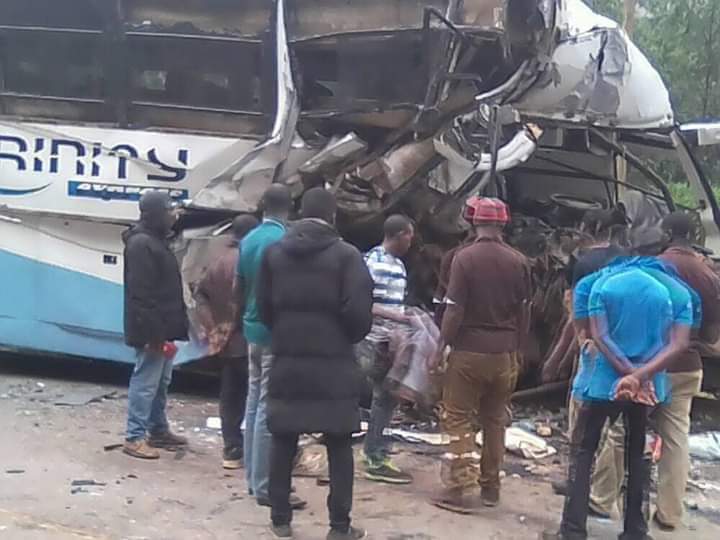
Rwanda’s Trinity bus burnt while on the way to Uganda, passengers flee


BY JAVIRA SSEBWAMI

Trinity bus has caught fire leaving passengers stranded (PHOTO/File)


BUWAMA — A bus belonging to Trinity Express, a Rwandan based travel company on Tuesday morning went up in flames in Mpigi.

All the passengers survived but they lost their property to the fire.
The bus registration number RAD 664D from Kigali heading to Kampala went up in flames at Buwama Police Check point.

Video footage of the incident shows large flames at the rear of the bus, sending plumes of black smoke into the sky.

Police suspects the fire started in the engine compartment before it spread to the rest bus.
Trinity Express is a Rwanda based company on the international Kigali-Kampala route. It has been growing rapidly over the past few years.


Thanks for reading. Follow the page and Share it.

Sunday, February 9, 2020

The EAC to deploy the Observation Mission Team to supervise Burundi 2020 elections


In a press conference organized by the East African Community Secretariat General, on February 08th, 2020, in Bujumbura, Burundi, it was announced that the East African Community will deploy an Observation Mission Team to supervise the upcoming Burundi 2020 elections which are slated for May this year.

The EAC Secretary-General, Liberat Mpfumukeko, assured the region and the international community that Burundi elections will be fair, inclusive and peaceful.

The East African Community has pledged to support credible, free, fair and peaceful elections, Mpfumukeko added.

Mfumukeko said that the East African Community has already dispatched a group of experts to make consultations with Burundi official and Burundi’s electoral commission in order to make sure that the upcoming elections will be peaceful and inclusive.

Thanks for reading. Follow the page and Share it.