Showing posts with label Cameroon. Show all posts

Saturday, January 9, 2021

CAMEROON: At least 14 killed in Boko Haram attack


At least 14 people have been killed in a Boko Haram attack in northern Cameroon,

The overnight attack took place in the town of Mozogo, in Cameroon's Far North region.

The jihadist group in recent days have staged several attacks in the same region despite the government's claims of success against them.

According to the mayor of Mozogo, Boukar Medjewe, local residents started fleeing to a nearby forest as soon as they heard that the attackers were approaching the town.

A suicide bomber who hid among the fleeing civilians is reported to have detonated explosives killing 11 people on the spot, before gunmen shot dead three others.

According to the UN Refugee Agency, violence committed by Boko Haram has affected some 26 million people in the Lake Chad region and displaced 2.6 million others.


Thanks for reading. Follow the page and Share it.

Friday, June 5, 2020

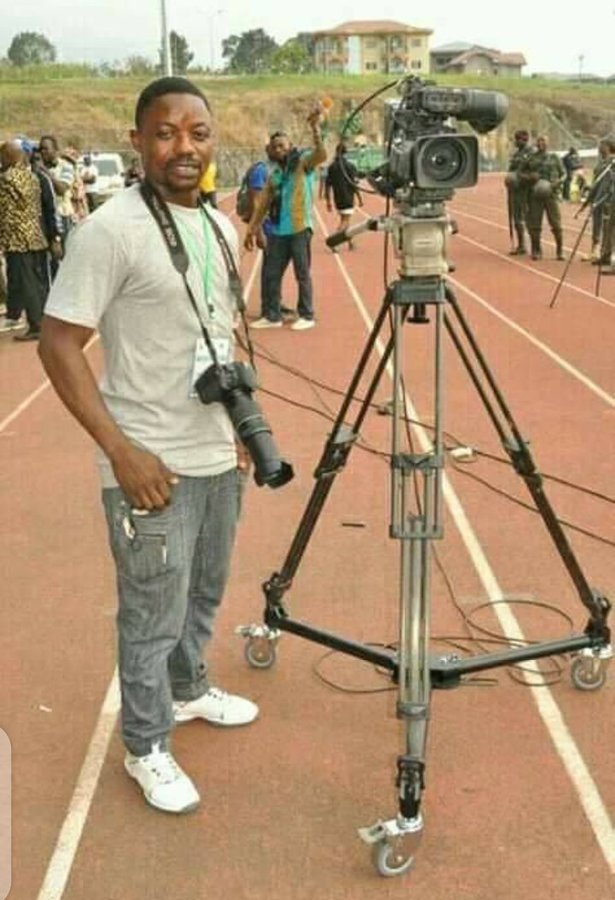
Cameroonian journalist Samuel Wazizi dies in government detention


Media watchdog calls Samuel Wazizi's death 'the worst crime against a journalist in the past 10 years in Cameroon'.


Cameroonian journalist Samuel Wazizi, who was arrested in August for criticising the government's handling of a separatist revolt, has died in detention, rights group Reporters Without Borders (RSF) has said.  

Wazizi worked for CMTV, a local broadcaster based in Southwest Region, one of two areas where separatists in 2017 launched an armed campaign to establish an independent homeland for Cameroon's English-speaking minority.


"Wazizi died in detention," RSF said in a statement issued late on Wednesday that called for a "thorough and independent investigation" into what happened. 

He was arrested on August 2, 2019, and "accused of speaking critically on the air about the authorities and their handling of the crisis," the watchdog said.  


Five days later, he was taken from a police station in the city of Buea to the local headquarters of the army's 21st Motorised Infantry Battalion, but from then on, neither his family nor his lawyers were allowed any contact with him or given any information, it said. 

RSF said Wazizi's death had been confirmed by two sources, including the head of the Cameroonian National Journalists' Union, while a senior military officer said the journalist had been "ill" but gave no further details.


On Tuesday, privately-owned channel Equinoxe TV, quoting what it described as sources close to the military command, said Wazizi had died during transfer to the capital, Yaounde, at an unknown date after his arrest.  


RSF said Wazizi's death in detention, while being held incommunicado, "is the worst crime against a journalist in the past 10 years in Cameroon".  


"We call on the Cameroonian authorities to end the intolerable silence around this case, to return the journalist's body to his family, and to conduct a thorough, independent investigation to establish the chain of responsibility and circumstances leading to this tragedy," it added.

Army confirmation


On Friday, Cameroon's army on Friday confirmed Wazizi died in detention "as a result of severe sepsis" on August 17, 2019 - 10 months after the fact and 15 days after RSF said he was arrested.


In the statement, army spokesman Cyrille Atonfack Nguemo said the military took custody of Wazizi on August 7 after investigations revealed he was coordinating logistics for separatist fighters - charges his family and colleagues deny.


On August 13, Nguemo said, Wazizi was placed into the custody of the national gendarmerie - a military police force. Soon after, Wazizi became sick and was taken to hospital in Yaounde, where he died on August 17, Nguemo said.


"He clearly died from a severe sepsis and not from any acts of torture," Nguemo said, rejecting accusations of torture made by the head of the journalists' union.


Nguemo also said that Wazizi's family was informed of his death. But Wazizi's brother, Henry Abuwe, denied that.


"It's a lie," he was quoted as saying by Reuters news agency, adding that his brother was "loved by everyone" and had never worked with the separatists.


#JusticeforWazizi


Cameroon ranked 134th out of 180 countries and territories in RSF's 2020 World Press Freedom Index, three places lower than the previous year.

On social media, the hashtag #JusticeForWazizi was used by journalists, civil society figures and the opposition. 


Kah Walla, a Cameroonian opposition figure and social activist, wrote on Twitter: "300 days. A family was looking for their son. Loved ones were searching for him. 300 days. 300 days where his lawyers could not see him. 300 days where he did not show up for court. 300 days hope was kept alive. 300 days. They had already killed him."


Buea is the capital of the Southwest Region, which, along with the neighbouring Northwest Region, has been gripped by violence since the separatist revolt began in October 2017.  


The conflict, rooted in long-standing perceptions of discrimination among Cameroon's English-speaking minority by the French-speaking majority, has claimed more than 3,000 lives and forced nearly 700,000 people to flee their homes.


Rights groups say atrocities and abuses have been committed by both the separatists and the security forces.


The United Nations and Human Rights Watch on Thursday condemned intensifying attacks, abductions and extortion that humanitarian workers are experiencing in the two anglophone regions. 

The statement singled out "non-state armed groups" over the kidnappings, while saying Cameroon security forces had delayed the delivery of aid.


Thanks for reading. Follow the page and Share it.

Saturday, December 21, 2019

Cameroon grants 'special status' to Anglophone region amid unrest


Yaounde passes law allowing English-speaking regions 'special status' in a bid to calm the deadly conflict.

The violence forced half a million people to flee and presented President Paul Biya with his biggest threat in 40 years of rule [Charles Platiau/Reuters]

Cameroon's parliament has granted "special status" to two English-speaking regions to try to calm separatist violence that has killed 2,000 people, but the separatists say only independence would satisfy them.

The law, passed on Friday in a special session of parliament, said the Anglophone Northwest and Southwest regions would "benefit from a special status founded on their linguistic particularity and historic heritage".

The legislation mentioned schools and the judiciary system as part of the special status - a delayed response to protests in 2016 by teachers and lawyers.

Conflict between Cameroon's army and English-speaking fighters seeking to form a breakaway state called Ambazonia began after the government cracked down violently on peaceful protesters complaining of being marginalised by the French-speaking majority.

The conflict has forced half a million people to flee and presented President Paul Biya with his biggest threat in nearly 40 years of rule.

"This is a law unique in the world," senator Samuel Obam Assam, from the ruling Cameroon People's Democratic Movement, the majority group in the Senate, said. "It is an answer to our fellow countrymen’s concerns."

But Jean-Michel Nintcheu, a congressman from the main opposition party, said he did not believe the law would solve the crisis.

"The Anglophones, even the moderate ones, want a federal state. This law is not the result of a dialogue ... we were against it," he said.

'We want independence'

The reforms were recommended at the end of national talks organised by Biya in October to chart a way out of the conflict.

But separatists boycotted that dialogue, saying they would negotiate only if the government released all the political prisoners and withdrew the military from the Northwest and Southwest.

"We want independence and nothing else," said Ivo Tapang, a spokesman for 13 armed groups called the Contender Forces of Ambazonia.

He said the special status made no difference as no law passed in the Cameroonian parliament should be imposed in Ambazonia.

The roots of Cameroonian English speakers’ grievances go back a century to the League of Nations' decision to split the former German colony of Kamerun between the allied French and British victors at the end of the first world war.


SOURCE: NEWS AGENCIES


Thanks for reading. Follow the page and Share it.

Friday, November 15, 2019

Cameroon: Secessionist leader returns to challenge Yaoundé


By Franck Foute

Field Marshall is the commander of the Lebialem Red Dragons. Ambazonia Red Dragons Of Lebialem / Facebook

Ten months after the news of his death, the mysterious secessionist fighter and commander of the Lebialem Red Dragons, Field Marshall, resurfaced and proclaimed himself traditional chief of Essoh-Attah, in southwest Cameroon.

On October 1, 2019, the day of celebration of the “independence” of Ambazonia, a man wearing a military fatigues with the insignia of the Cameroonian army appeared on the esplanade of the Royal Palace of Essoh-Attah. His green beret barely concealed his face: it was Field Marshall, the commander of the Lebialem Red Dragons militia.

The warlord of this militia, one of the most violent in the armed conflict between secessionists and armed forces in the English-speaking part of Cameroon, was thought to be dead.

His appearance, filmed by an amateur cameraman, showed him surrounded by armed fighters, celebrating his claim as the traditional chief of Essoh-Attah, a village isolated from the rest of the country since the crisis broke out.

Field Marshall seems to have carefully prepared his return. In his speech from the throne, he said, “I am the leader of the Lebialem. I love my people, and I will not let anyone harm them. Anyone who comes to bother you in this village, let me know and they will know who Field Marshall is.”
The threat was obvious: it was either submit to his reign or die.

A reputation built in blood

The Field Marshall, whose real name is Leke Olivier Fongunueh, built his reputation in blood and is one of the most feared secessionists on the English-speaking war front.

According to Amnesty International, the Red Dragons and their leader are responsible for several deadly attacks, “aimed at spreading fear among the population, even going so far as to burn down schools and target teachers who do not apply the slogan of boycott”. This is in addition to the targeted killings of members of the security forces.

Under his violent regime, the Cameroonian administrators disappeared from the villages in Lebialem, as did the traditional chiefs who abandoned their palaces to take refuge in the neighbouring regions. By replacing them, Field Marshall strengthened his grip on the territory where government forces are struggling to regain control. So far, none of the military interventions undertaken there have succeeded in dislodging the militia.


His successes against the government, and despite the announcement of his “death” in December 2018, created a myth of invincibility, making him a much a feared figure in the region. The Field Marshall remains defiant and taunted the Cameroonian army.
They announced my death in December, here I am. Let them come and get me!”, he said when he returned to Lebialem.

A family business

The defence force accuse the Field Marshall of using civilians as human shields. “It is difficult to carry out certain types of intervention in this context because of the presence of civilians,” said an anonymous Ministry of Defence official, explaining that the “terrorists hide among the population, and it is impossible to attack them without causing collateral damage”.

The former Cameroonian army soldier, born in December 1968 in Azi (South-West France), seemed an unlikely candidate to challenge the republican order. His relatives remember an “obedient boy” who, however, did not complete his schooling, due to “poor results”. His brother, Chris Anu, on the other hand, was known as a “troublemaker” but excelled in his studies and embarked on a career as a computer engineer in the United States.

Today, the two brothers are in the front line of the armed demand in the English-speaking area. Field Marshall leads the military front while Chris Anu provides political coordination as spokesman for the Ambazonia interim government. Although their families have paid a heavy price, the two brothers will not give up.

“Let them come and get me”

Last August, Field Marshall’s mother, Grace Mafuatem, and her sister, Beza Berist, were arrested in Yaoundé in possession of CFAF 1.6 million. They had settled in the Cameroonian capital after a fire in their family home in Lebialem.

The authorities claim they are suspected of concealing the ransom bounties collected by Field Marshall in the field. But their lawyers say that they have “lost all contact” with him.
While the opening of their trial for complicity in terrorism is still awaited at the military court, Field Marshall believes that it is a plot to force him to return it.

“The Republic soldiers caught my mother, my sister, my best friend, my wife. They locked them up. They are asking that I, Field Marshall of Ambazonia, lay down my arms. Here I am in Lebialem, let them come and get me,” he repeated, during his induction as head of Essoh-Ettah.

The Ambazonian leader has rejected the final conclusions of the Grand National Dialogue organized by President Paul Biya. Although his stance conflicts with other secessionist fighters such as General Ayeke and General Ivo, he has recently reaffirmed his loyalty to the Ambazonia interim government led by Samuel Sako, since the imprisonment of Sisiku Ayuk Tabe.


Thanks for reading. Follow the page and Share it.

Sunday, November 10, 2019

Cameroon cardinal: Christians called to be ‘rebels against evil’


Cameroonian troops in a file photo. (Credit: George Osodi/AP.)

YAOUNDÉ, Cameroon - Every Christian is a “rebel against evil,” according to Cameroon’s lone cardinal.
Speaking during a program on Cameroonian state television, Cardinal Christian Tumi also called on Christians to become more involved in politics.

“Every Christian is a rebel against all that is not good-that is morally evil. A Christian is a rebel against lies,” Tumi said.

“Politics is part of the world and Christ has told us: Go into the whole world and proclaim the Gospel message. Wherever there is man acting; the Church has to be present,” he said.

“We are therefore called to evangelize the politicians and politics, because their activity also is preparing them for the kingdom of God. There is no activity that is out of the region of the church,” Tumi continued.

The program brought together Christian leaders from different denominations to discuss relations between Church and State in the West African country, which is currently experiencing a number of crises, including a rebellion in the country’s two English-speaking provinces. Cameroon is 80 percent French-speaking, and the Anglophone minority has long complained about discrimination and marginalization by the Francophone majority.

Around 70 percent of the country’s population is Christian, almost evenly divided between Catholics and Protestants.

During the program, the President of the Cameroon Baptist Convention, Reverend Godwill Ncham, said he believed in the separation of Church and State, but insisted it doesn’t mean that “the Church or Christians cannot be involved in politics.”

“It is intended to create boundaries so that as a Christian when you get involved in politics, you don’t turn the political platform into a Church,” the Baptist minister said.

“So I believe the dichotomy of Christians not involved in politics is not true to scripture, because the Christian life calls the Christian to engage all of life. There is also the false dichotomy of circular and sacred. I am first a Christian before a pastor; and my Christian life calls me to engage the traditional sinful background from which I come unto transformation, and I am supposed to engage others and bring them to transformation as well .So to say that a Christian should not be involved in politics because he would dirty himself is inadequate. A Christian should be involved in politics in order to clean up the politics,” Ncham continued.

Tumi even said that if had not become a Catholic priest, he would have become a politician.
“Politics is good. Take for instance; President Paul Biya. He will answer for the role he has played as the head of state of a people of God. The people in every country are the people of God, created by Him. Every power comes from God, and therefore they must exercise power with fear, and look at their power as occasions to serve,” the cardinal said.

Tumi criticized politicians for telling lies and making promises they never intend to keep, and said Christian politicians should be able to inject truth into politics.

“The Truth is the agreement between what I am saying and what I am thinking. If what I am thinking contradicts what I am saying, I am telling a lie. And we pastors have been called and sent by God to promote the truth. Christ is the truth. ‘I am the Truth, I am the light, I am the way,’ says Christ. The truth is objective. If it is not objective, it’s not true,” he explained.

Tumi said the Christian’s mission should also be to sanitize politics, because “Christ came to save the sinner, not the saint.”

“So where sin abounds, the Grace of God also abounds. So therefore, wherever a human being is found-be he or she good or bad, we have to be there to try to bring the lost child back to the fold,” he said.

The Christian leaders were unanimous that the state was “at war” against the Church.
The Moderator of the Presbyterian Church, Rt. Rev. Samuel Fonki Forba, accused the government of undermining religious studies.

“Religious studies in our schools should not be mocked and treated as a side issue,” he said.

“What is happening in our country is because the morals of our society have gone down the drain, and we must do something to keep those morals. When things are bad, that’s when they (political leaders) call on religious leaders to come and have an ecumenical prayer session for the nation,” Forba continued.

“When things are moving the way they want them to move, the Church is not recognized. And so we are saying that we have a lot to offer; to partner with the state of Cameroon to change the present dispensation. They must recognize the role of the Church in all of this,” he said.

Tumi was even more harsh in his criticism of the government, reprimanding the state for excluding religious studies in competitive examinations for professional schools.

“It’s a fight against us. It’s a fight by the government against us,” the cardinal said.

“You are telling the children that religion is not so important, and it betrays your ignorance. The highest university in England is Oxford University and the highest degree you get in Oxford University is DD - Doctor of Divinity, and that’s religion,” he said.

The animosity of the Cameroonian government against the Church reached a head in 2017 when the Archbishop Cornelius Fontem Esua of Bamenda, his auxiliary Bishop Michael Bibi, Bishop George Nkuo of Kumbo, two priests - Fathers Michael Kintang and William Neba - and ministers from other denominations were dragged to court for  statements made in connection with the Anglophone crisis in Cameroon’s North West and South West regions.

Ncham said such extreme measures by the state are to be expected.

“The Church being taken to court is expected, because if you look at the Sermon on the Mount, Jesus says: ‘Blessed are the peacemakers, blessed are those who thirst after righteousness’; and he says those who are peacemakers and who thirst after righteousness will be persecuted. So we consider the being taken to court as being part of the persecution of the Church trying to fill its role in the community,” the Baptist minister said. “And it shouldn’t hurt us to produce wounds that will not heal, it should fortify us to be resilient to continue to play our role in the community.”


Thanks for reading. Follow the page and Share it.

Monday, September 30, 2019

Why Cameroon’s national dialogue will accomplish nothing

BY R. MAXWELL BONE & AKEM KELVIN NKWAIN

President Biya could have outlined a new plan to address the Anglophone crisis. Instead, he announced talks, beginning today, that are doomed to fail.


President Paul Biya of Cameroon has been in power since 1982. Credit: UN Photo/Marco Castro.
On 10 September, President Paul Biya delivered a rare “address to the nation” in which he spoke of the Anglophone Crisis facing Cameroon. Beginning in 2016, the situation in the country’s two English-speaking regions has quickly spiralled from protests by teachers and lawyers into a bloody separatist war.

In the speech, many hoped Biya might acknowledge his government’s role in this rapid deterioration, which has seen brutal crackdowns of peaceful demonstrations, arbitrary arrests and alleged human rights violations by security forces. They also hoped the president might recognise the marginalisation that Anglophone Cameroonians have faced for decades.

Instead, the address took on a defiant tone. Biya started by insisting the government  has already fully addressed the demands made by protesters in 2016. This was the first time since that year that the government has referred to those demands and the claim that they have been implemented is questionable. Biya then claimed that protesters’ grievances are unfounded anyway as the country has always had an Anglophone Prime Minister. While this is true, the premier has also always been side-lined.

The president then became even more combative in talking about the war of secession that has claimed thousands of lives and displaced at least half a million people. He claimed that despite his government’s reforms, radical elements have hijacked the situation for their own interest in calling for an independent state of Ambazonia. He listed several atrocities separatist fighters have committed including murders, rapes, kidnappings, the preventing of children from going to school, and the razing of healthcare facilities. Biya failed to mention the many similarly horrific acts carried out by the military such as the burning down of scores of villages in January 2018 and killing of civilians.

After this revisionist take on history, Biya finally spoke about resolving the crisis. He said there have been “multiple and varied initiatives” to bring the government and secessionists together, but claimed they were premised on separatist propaganda. He was referring to a dialogue facilitated by the Center for Humanitarian Dialogue in Geneva, which secessionist leaders and the UN have endorsed but the Cameroonian government has approached with scepticism. Now, Biya made clear the Swiss-led talks are as good as dead in the eyes of Cameroon’s government.

In its place, Biya outlined a new “major national dialogue” to be spearheaded by Prime Minister Dion Ngute, an Anglophone from the Southwest. These talks, he said, would be inclusive and aimed at addressing not just the Anglophone Crisis but “issues of national interest such as national unity, national integration and living together”. Following its announcement, members of Ambazonia’s interim government and leading activists were invited to take part.
Repeating the mistakes of the past

On the surface, this new initiative may appear to be a genuine effort to resolve the Anglophone crisis, but deeper analysis raises concerns.

Firstly, the decision to include citizens from all of Cameroon’s regions and widen the remit of the talks has some merits. Divisions between the two Anglophone regions and eight Francophone have grown. There has been an increase in hostile rhetoric, for instance, with the derogatory term “Anglofools” becoming more widely used. A national dialogue could help mitigate some of these differences.

At the same time, however, the move also diminishes the relative agency of Anglophones in attendance. It risks replicating the dynamics of national events throughout Cameroon’s history in which the perspectives and grievances of English-speaking representatives, who have made up just a quarter of attendees, have been side-lined. The dialogue risks repeating the same dynamics that led to the crisis in the first place. These anxieties are reinforced by fears that the ruling Cameroon People’s Democratic Movement will dominate the process, a factor that has raised concerns amongst civil society.

It is also important to note that while secessionist leaders have been invited to attend, the chances of them doing so are slim to none. While the leaders of the Ambazonian independence movement, who are based overseas, have been willing to travel to Switzerland and the US, they have refused to travel to Cameroon or many of its neighbours for fear of arrest. In January 2017 several secessionist leaders were seized in Nigeria and sent to Cameroon for sentencing. More recently, a separatist was detained in Ghana. Others have had family members arbitrarily arrested in Cameroon.

The secessionists have made it clear that they would not partake in a “national dialogue” anyway. They see the crisis as a battle between two peoples, Ambazonians and Cameroonians. Moreover, hundreds of their activists are in prison and several of the movement’s leaders were recently sentenced to life in prison on charges of terrorism.

When it was announced that President Biya would deliver a special address to the nation, many hoped he would signal a change of course. Instead, he denied the existence of longstanding grievances and the role his government’s violent actions have had in leading to today’s deadly war. It is clear that the national dialogue, which begins today, will not differ from those carried out in the past. Any Anglophones that attend will walk away disappointed as Cameroon’s two English-speaking regions continue to suffer.


Thanks for reading. Follow the page and Share it.

Cameroon dialogue starts as Anglophone separatists pull out

National dialogue in trouble as separatists skip talks calling for international mediation to resolve crisis.

 
Cameroonian soldiers sit at the entrance to a polling station in the capital Yaounde [File: Nic Bothma/EPA]
Cameroon will start a "national dialogue" on Monday in a bid to end the separatist conflict in the country's Anglophone provinces, but key rebel leaders have already refused to participate.
Nearly 3,000 people have died and half a million fled their homes since fighting broke out in 2017 between the army and armed fighters who want independence for Cameroon's two English-speaking provinces.

The talks, led by Prime Minister Joseph Dion Ngute, are scheduled to take place from September 30 to October 4 at the Congressional palace in the capital Yaounde. 


President Paul Biya, who has been in power for 37 years, hopes the talks will end a crisis that is also hurting the economy of the coffee and cocoa-producing Central African country.

October 1 marks the second anniversary of the spiral towards conflict - the declaration of the self-described "Republic of Ambazonia" for Cameroon's English-speaking minority.

Even before it began, the national dialogue ran into trouble with many activists arrested and experts voicing scepticism that it would yield tangible results.

English-speakers account for about a fifth of Cameroon's population of 24 million, who are majority French-speaking.

Anglophones are mainly concentrated in two western areas, the Northwest Region and the Southwest Region that were incorporated into the French-speaking state after the colonial era in Africa wound down 60 years ago. Many locals there complain of discrimination and marginalisation.

In a report published last week, the International Crisis Group (ICG) estimated that around 3,000 people have been killed by separatist violence and the military crackdown.

The ICG said the talks do not include separatists or Anglophone leaders who support more federalist solutions.

"It thus risks further frustrating Anglophones widening the gulf between the two sides and empowering hardliners," the group said.

"The government should make greater space for Anglophones, particularly federalists who are willing to attend. It should also seek a neutral facilitator."
Biya's government has rejected both a return to more federalism and any proposed separation.
But Anglophone supporters are also divided between those two options for their regions.
The government's dialogue spokesman, George Ewane, said Cameroonian authorities had held preliminary discussions with some separatists, adding that even hardliners were welcome to join the talks.

'Smokescreen'

Mark Bareta, a separatist leader who is very active on social media, was the one most open to dialogue and it was through him that invitations to the others were sent, Ewane said.
But on Friday, Bareta announced that he was pulling out, saying that "the only way to have real negotiations is to hold them on neutral territory".
Of the 16 separatist leaders invited, those heading armed groups such as Ebenezer Akwanga and Cho Ayaba are also snubbing the talks.
Akwanga told AFP that the event was a "smokescreen for the international community rather than an attempt to secure a complete and lasting solution ... to the annexation of our country, Southern Cameroons."

Most of the leaders have expressed willingness to hold talks with the government but in the presence of an international mediator and in a foreign country with the terms for secession the main item on the agenda, according to the ICG.

However, more moderate Anglophones like Cardinal Christian Tumi, the influential archbishop of Cameroon's commercial capital Douala, have welcomed the initiative and urged the separatists to participate.

'We can't talk to ghosts'


An official from the Southwest Region said traditional chiefs had asked armed groups to attend the talks but they had spurned the offer.

The official, speaking on condition of anonymity, however asked the groups to "emerge from the woodwork", adding that "measures have been taken to ensure the security of those who attend."

"We cannot talk with ghosts," the official said.


Locals are meanwhile divided about the outcome of the talks.

No good can come of this. It's a game," said a hardcore secessionist who identified himself as Agbor.

"If we must go for talks, it would be to discuss the terms of separation and not anything else," he said.

But Jeannette Benga, a prominent figure of civil society in Buea, the capital of the Southwest region, voiced hope that "the two come to an agreement."
Blaise Chamango, the head of an NGO said the five-day talks were not enough to "debate the anglophone crisis and the other major problems in Cameroon."


Thanks for reading. Follow the page and Share it.

Thursday, September 12, 2019

Cameroon’s Biya finally calls for dialogue with Anglophone rebels

By Eromo Egbejule

President of Cameroon Paul Biya is now open to a dialogue with Anglophone rebels. Lintao Zhang/Pool via Reuters

Earlier this week, Cameroon's absentee president, Paul Biya, addressed his countrymen – calling for a national dialogue later this month on a multitude of problems facing the Central African country.

Biya’s address came as a shock to the country’s estimated 25.8 million people who are not accustomed to public pronouncements from the reclusive president, who has been in power since 1982.
Chief among the problems is the Anglophone crisis, which has pitted groups from the bilingual country’s two unequal parts – its 80% French-speaking majority versus its 20% English-speaking minority – against each other.

Bubbling tensions

Tensions have been bubbling under the surface between both sides since before the country became a unitary state in 1972. The latest round of conflict began with a 2016 protest by teachers and lawyers about the right of North-West and South-West regions to maintain Anglophone legal and educational systems.
The protests against marginalisation have continued for three years running as soldiers from the Francophone-majority government have been sent to quell the uprising by armed separatists agitating for the secession of the region that has now been described as the Republic of Ambazonia. Ambazonia declared its independence on 1 October 2017.

Opposing views

But opinion is divided on the ground about how to resolve the crisis. The separatist rebels do not have widespread support, with many groups calling for devolution and federalism to increase local autonomy.
In the conflict, more than 30,000 people have fled across the border into neighbouring Nigeria, while another 500,000 have been internally displaced. Many people have also been killed in extrajudicial abuses ordered mostly by government soldiers.

Crackdowns

In January 2018, Julius Ayuk Tabe, self-proclaimed president of Ambazonia and members of his ruling council were arrested in Nigeria’s capital, Abuja, and extradited to Cameroon for trial. In August 2019, they were sentenced to life imprisonment by a military tribunal in Yaoundé, Cameroon’s capital.


Thanks for reading. Follow the page and Share it.