Showing posts with label COVID-19. Show all posts

Thursday, July 8, 2021

COVID-19: Worst yet to come for Africa, says WHO


Africa has just lived through its most devastating week of the pandemic, but the worst is yet to come as the third wave gathers pace on the continent, the World Health Organization said Thursday.

“Africa has just marked the continent’s most dire pandemic week ever. But the worst is yet to come as the fast-moving third wave continues to gain speed and new ground,” said Dr Matshidiso Moeti, the WHO’s regional director for Africa.

Cases are doubling every 18 days, compared with every 21 days only a week ago, she said during a virtual press conference, adding that “the end to this precipitous rise is still weeks away.”

Coronavirus cases have been rising in Africa since the start of the third wave on the continent on May 3. During the week ending July 4, more than 251,000 new Covid-19 cases were recorded on the continent,  a 20% increase over the previous week and a 12% jump from the previous January peak.

Sixteen African countries are now seeing a resurgence of the virus, with the more contagious Delta strain detected in 10 of them.

South Africa is the worst-hit country in Africa, with new daily infections hitting record highs of 26,000 cases over the weekend, fuelled by the Delta variant.

Vaccination rates remain sluggish, with only 16 million people, 2% of the African population, fully vaccinated.

But Moeti said there was some room for optimism because vaccine deliveries were picking up after grinding to a near halt in May and early June.
“Our appeals for ‘we first and not me first’ are finally turning talk into action. But the deliveries can’t come soon enough because the third wave looms large across the continent,” she said.

Africa has so far received 66 million doses and has administered 50 million of them.

Moeti urged governments to expand vaccination sites and take other measures to take advantage of the vaccine deliveries when they come.

According to latest figures, Africa has officially registered  5,730,638 cases and 147,125 deaths from Covid-19.


AFP

Thanks for reading. Follow the page and Share it.

Tuesday, March 23, 2021

Kenya Airways sees passenger business recovery in 2024, turns to cargo


Kenya Airways planes are seen parked at the Jomo Kenyatta International Airport near Nairobi, Kenya November 6, 2019. REUTERS/Thomas Mukoya


Kenya Airways expects its passenger business to recover from the impact of the COVID-19 pandemic in 2024, its chief executive said on Tuesday.

The carrier, whose joint venture with Air France KLM is set to expire this September, will boost its cargo business to help blunt the impact of the drop in demand for travel by passengers, CEO Allan Kilavuka told Reuters.


Thanks for reading. Follow the page and Share it.

Thursday, March 4, 2021

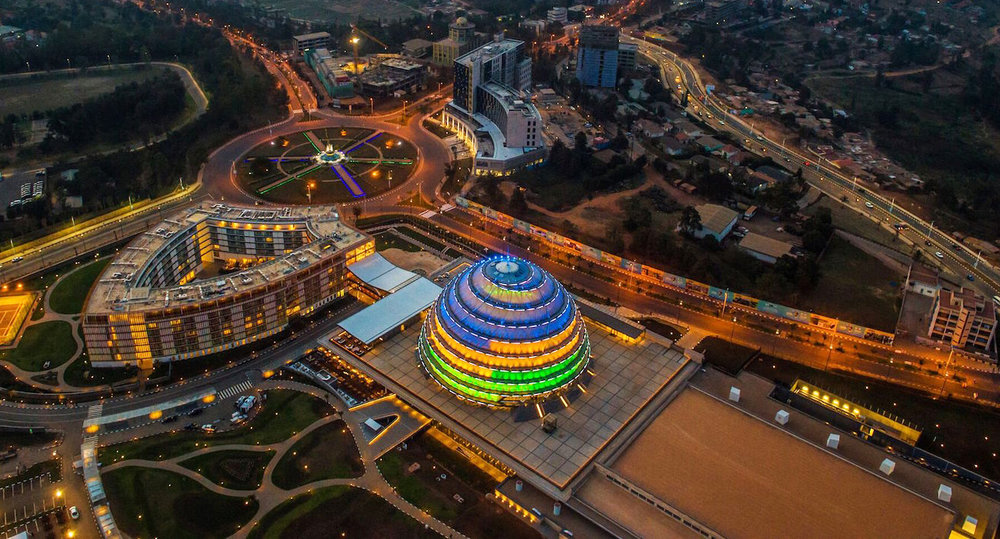
Rwanda's economy in recession


Rwanda’s economy

Rwanda’s economy is in a recession. Restrictions imposed to curb the coronavirus is piling pressure on the economy. Thousands face unemployment and there’s risk of more Rwandans falling into poverty. That’s why analysts are urging the government to take additional measures to spur growth in this East African nation. Retail trade, leisure, hospitality and conference tourism are key sectors hard hit.

The country of 12 million people has seen strict coronavirus-prevention measures in place since the onset of the COVID-19 pandemic. However, the Rwandan population has felt the effects of these measures - with 5% more unemployed since the start of the health crisis i.e. 550,000 people in 2021.

Over 80% of those recently out of work are in rural areas, according to data published by the World Bank this week. The pandemic has affected all sectors in the nation - including services, small to medium enterprises and the leisure and tourism industry.

There has been a significant drop in activity as Africa’s technology hub has been in lockdown - leading to a notable decline in growth.

The government has adopted an economic recovery plan estimated at 900 million USD - whose implementation will span the two fiscal years 2019/20 and 2020/21.

"Tourism has been the top foreign exchange earner, and when the pandemic kicked in, this sector was heavily affected. If you look into the growth that we experienced in 2019, you are talking about where the economy grew by 9.4 percent, but if you go into the numbers from 2020, we are projecting to receive a growth rate that is going to be even less than 2 percent’’, Zephanie Niyonkuru, Deputy CEO, Rwanda Development Board tells Ignatius Annor.


Thanks for reading. Follow the page and Share it.

Saturday, February 27, 2021

Tanzania COVID U-turn ‘a good move’ – but is it good enough?


After months of downplaying deadly disease, government officials have called on people to take precautions and wear masks.


Tanzania stopped releasing infection numbers in April 2020 [Ericky Boniphace/AFP]

Dar-es-Salaam, Tanzania – Esther Mngodo, like other Tanzanians, was relieved to hear this week government officials are finally urging people in the country to take precautions against the coronavirus – and even wear face masks.

“It is a good move,” said Mngodo, a 34-year-old resident of Dar-es-Salaam. “But much more needs to be done to increase public awareness, testing and treatment. Most importantly, we must have a clear strategy on how to navigate through these unprecedented times.”

In a surprise change in the official stance on coronavirus, President John Magufuli on Sunday said the government had not forbidden the wearing of masks and encouraged those who wanted to do so.

However, he warned against what he claimed were faulty face coverings on sale in the country, suggesting that high coronavirus-related death rates worldwide could be linked to the uptake of such products and claiming those in Tanzania’s rural areas were less likely to fall victim to the virus because they tended not to wear them.

“The government has not forbidden mask-wearing. But we have to be careful about which masks we wear. We will perish. Don’t think we’re loved so much. Economic war is bad,” Magufuli told a congregation at a church service in Dar-es-Salaam.

“These masks which we buy in the shops- we’re killing ourselves,” he argued, before advising Tanzanians to either to make the masks themselves or use those produced locally.

Magufuli has long downplayed the severity of COVID-19, urging Tanzanians to pray, use steam inhalation and embrace local remedies to protect themselves from the respiratory disease. Tanzania stopped releasing infection numbers in April 2020, weeks before Magufuli declared the country coronavirus-free in June through divine intervention.

For Mngodo, the recent U-turn could be a result of what seems to be a deadly resurgence of infection, which has swept across the country over the past few months.

“It appears that the extent of the problem has reached to a point where the government cannot deny the severity of the problem,” said Mngodo, a media consultant.

Announcements of deaths often attributed to “the current pneumonia” or “breathing problems” have flooded social media.

Among the deceased are a number of high-profile individuals, including several university professors, a former governor of the central bank, the country’s chief secretary and Zanzibar’s first vice president, Maalim Seif Sharif Hamad.

Of them, Hamad was the only person confirmed to have been infected by the novel coronavirus, as he texted his COVID-19 test results to the media. As for the others, the public has been left to speculate about the causes of their deaths, at a time when the world is stilling battling the coronavirus pandemic and many common Tanzanians have been touched by the effects of it.

These circumstances have led religious leaders and other critics, particularly on social media, to put pressure on the government to provide clear and consistent guidelines on fighting the pandemic, while also urging individuals to take precautions.

A Tanzanian medical doctor based in the United States, Frank Minja, said the change of mind is welcomed, if long overdue, and could present an opportunity. “We want to encourage [the president] to move faster in implementing what we know to be effective and implement it right away,” he said.

“I don’t want to say it’s too late, because if we say too late then it means we might as well not do anything. And because, by its nature, the pandemic attacks in waves, it is never too late to start doing the right thing,” added Minja, who has been campaigning on social media to raise awareness about the coronavirus.

Dorothy Semu, acting chairperson of the opposition ACT Wazalendo party, criticised Magufuli, saying the measures implemented when the virus first entered the country – including physical distancing and cancellation of large events – should have been kept in place.

“I am a politician but I am also a believer in science,” Semu said. “As leaders responsible for people’s lives it is important that we make our decisions based on facts. It’s like when HIV/AIDS was discovered; some people denied its presence and many lives were lost. So, I expected the president, who is also a scientist, to have continued with the past measures and we would have saved many lives.”


Magufuli in June declared Tanzania ‘coronavirus-free’, thanks to the prayers of its citizens [File: AP Photo]The new stance by Magufuli – a former teacher and industrial chemist – on mask-wearing seems to have also prompted many other public offices and officials to suddenly come forward and warn people of the dangers of coronavirus and measures individuals should take to protect themselves from the virus.

For instance, the agency which runs Dar-es-Salaam’s rapid transport buses on Monday said passengers would not be allowed to board if not wearing a mask.

Meanwhile, the Ministry of Health, headed by Dorothy Gwajima who has previously advocated steam inhalation and a vegetable smoothie to treat COVID-19, earlier this week issued a statement warning people against the virus and appealing to them to take precautions.

However, it insisted that it would not be recommending lockdown measures.

“As said by the president, we won last year and the economy continued to grow until we achieved middle-income economy status, and Coronavirus still existed,” said the ministry’s statement.

“We did not set lockdowns, and even now, we will not impose lockdowns because God is on our side.”


Thanks for reading. Follow the page and Share it.

Thursday, February 25, 2021

South Africa has found 4,000 Covid-19 re-infections


About 4,000 cases of re-infection with Covid-19 have been found in South Africa, Barry Schoub, the chair of the country’s Ministerial Advisory Committee on Vaccines, said.

“This is probably to a large extent due to the variant” of the virus that was first identified in the country, he said on a webinar on Wednesday.

The mutation, known by scientists as B.1.351, was identified in the country last last year and has become the dominant strain in the nation.

With over 1.5 million known coronavirus infections and almost 50,000 deaths, South Africa has been the hardest hit country on the continent.

On Thursday the South African government will release the results of a study into the transmissibility of the variant, whether it can cause re-infection and whether it causes more severe disease.


Thanks for reading. Follow the page and Share it.

Sunday, January 31, 2021

Zimbabwe Extends Lockdown, Dusk-to-Dawn Curfew Amid Surge in COVID19 Cases


Vice President Constantino Chiwenga says Zimbabwe is in the process of securing coronavirus vaccines to contain the pandemic which he said was in worrisome situation lately. (Columbus Mavhunga/VOA)

HARARE, ZIMBABWE - Public health experts in Zimbabwe say the country’s extension of a lockdown that includes a 12-hour, dusk-to-dawn curfew to thwart a recent swell in COVID19 cases and deaths will not yield much without adequate equipping of the country’s health care system.  The coronavirus has infected nearly 33,000 -- and two-thirds of its 1,178 deaths are from January alone according to official figures. The lockdown extension comes as the country says it is struggling to detect new highly contagious - and probably more lethal - variants of coronavirus.

Calvin Fambirai, the executive director of the Zimbabwe Association of Doctors for Human Rights, said his organization welcomed the two-week extension of the lockdown and a 12-hour, dusk-to-dawn curfew by President Emmerson Mnangagwa’s government.

“It was going to be illogical to relax the measures, considering the background of increased daily mortality and incidence rates of COVID-19 as compared to the pre-January levels," said Fambirai. "However, we think that there is need to complement the lockdown with one, expanding testing, case surveillance, and isolation of confirmed cases, secondly, there is need for expansion of health sector capacity to respond to severe disease of COVID-19 in order to minimize mortality, and thirdly there is need for an accelerated approach to nationwide vaccination.”

Announcing the lockdown extension late Friday, acting President Constantino Chiwenga said the government was concerned by recent spikes in infections and coronavirus-related deaths in Zimbabwe.

Official records show that more 52% of the country’s coronavirus infections are from January alone, while the rest are from last year, when the country had its first incident in March. Chiwenga summed-up the situation as "clearly worrisome" in an address on national television.  

“We have a likelihood of new strains and variants circulating. These strains are more transmissible and infectious. It is in light of this that the president of the Republic of Zimbabwe, Comrade Emmerson Dambudzo Mnangagwa, has decided to extend the level 4 national lockdown by another two weeks to the 15th of February 2021," said Chiwenga. "The president fully appreciates the difficulties which come with this extension. Livelihoods are being disrupted yet we must save lives and our nation.”

Banana vendor Brian Mutera says he is yet to receive government assistance promised last March, unlike the situation in other countries worldwide, Harare, Jan. 30, 2021. (Columbus Mavhunga)

Those most affected by the extension of the lockdown are informal traders, who constitute the country’s largest sector of employment. Most of them – like Brian Mutera – say they have yet to receive government assistance promised last March, unlike the situation in other countries worldwide. Consequently, he hangs around these shops selling vegetables despite government calls for him to stay at home.

“During this lockdown everyone is not wanted in town. We do hand-to-mouth living and it’s unfortunate," said Mutera. "In this Third World we are in Zimbabwe, there is death and life. I am here, I am dicing OK? with death. But I cannot be home. I have two children to look after. I have to come to the shops [to sell vegetables]. In developed world, government[s] are paying [handouts]. The situation of our economy, everybody knows. It’s unfortunate. We just pray to the Lord that we have to get a vaccine or something all over Southern Africa.”  

On Friday, Chiwenga -- who doubles as Zimbabwe’s health minister -- said the country was in the process of acquiring coronavirus vaccine. A health official earlier this week told a parliamentary committee that China and Russia were among countries that had offered to supply Zimbabwe with the vaccine. 


Thanks for reading. Follow the page and Share it.

Friday, January 29, 2021

Tanzania's President Criticized for Dismissing COVID-19 Vaccines


FILE - People use a handwashing station installed for members of the public entering a market in Dodoma, Tanzania, May 18, 2020. Tanzania’s government stopped reporting cases of COVID-19 in May.

DAR ES SALAAM, TANZANIA - Tanzanian President John Magufuli’s sharp rejection of COVID-19 vaccines was met Thursday with criticism, concern and confusion.

Magufuli in a speech Wednesday scorned the idea of a lockdown to prevent the coronavirus from spreading and poured doubt on the effectiveness of vaccines.

He claimed that Tanzanians vaccinated abroad had brought a coronavirus variant back to the country and repeated his stance that praying and inhaling steam offered better protection.

People should stand firm because vaccinations are dangerous, Magufuli said. He contended that if whites were able to come up with vaccinations, they would have found a vaccination for AIDS, tuberculosis, malaria and cancer by now.

'Extremely dangerous' remarks

Tanzanian opposition politicians criticized Magufuli’s words as undiplomatic and said they sent a poor message to the world.

Zitto Kabwe, a former member of parliament and a leader of the opposition Alliance for Change and Transparency party, said, “Africa is struggling because of the limited supply of vaccinations, and here you have a president of the second-largest economy in East Africa, and this president saying that vaccinations are problematic.  This is extremely dangerous, and I really don’t know how deadly this comment from the president will be going forward.”

Tanzania’s government stopped reporting cases of COVID-19 in May, when it had 509 infections and 21 deaths. Magufuli said there was no need to report cases or take precautions against the virus because God had protected Tanzania from it.


FILE - President John Magufuli gestures during a rally in Dar es Salaam, Tanzania, Oct. 23, 2015. Magufuli in a speech Jan. 27, 2021, scorned the idea of a lockdown to prevent the coronavirus from spreading and said vaccinations were dangerous.

Tanzanian activists and critics have been urging the government via social media to reveal COVID-19 infections in the country.

Kumbusho Dawson, an activist with the Change Tanzania Organization, said he hadn't seen any measures by the government, but that it should be taking all necessary precautions and following the World Health Organization’s advice on fighting the coronavirus. He said people should wear masks and wash their hands to keep themselves and others safe.

The WHO’s regional director for Africa, Dr. Matshidiso Moeti, also urged Tanzanians on Thursday to ramp up public health measures.  She tweeted that science shows vaccines work, and she encouraged Tanzania to prepare a COVID-19 vaccination campaign.

Some confused

The contrasting messages from the world and Magufuli left some Tanzanians, like Dar es Salaam resident Dorcas Mselle, confused.

She said that at least during the first wave of the pandemic, residents were given instructions on what to do, and schools were closed. But now, she said, if people decide to wear a mask or not, or to wash their hands or not, there seems to be no official objection. Mselle called the situation confusing and said Tanzanians still don't know the extent of the problem.

Magufuli was re-elected in a disputed October election but has come under increasing criticism from opposition parties and Western governments for stifling democracy.


Thanks for reading. Follow the page and Share it.

UK extends travel bans as United Arab Emirates, Burundi and Rwanda added to red list to prevent spread of new variant


United Arab Emirates, Burundi and Rwanda added to travel ban.


entry to the UK is banned for visitors arriving from the United Arab Emirates (UAE), Burundi and Rwanda from 29 January 2021 at 1pm – British, Irish and third-country nationals with residence rights in the UK will be allowed to enter


from 4am on Friday morning all arrivals who have, in the 10 days before their arrival in the UK, been in these destinations, and their households, will have to self-isolate immediately, and will not be eligible to use Test to Release


move is in response to new evidence showing the likely spread of a coronavirus variant first identified in South Africa

The government has today (28 January 2021) taken the urgent decision to ban travel to the UK from the United Arab Emirates (UAE), Burundi and Rwanda to prevent the spread of the new variant originally identified in South Africa into the UK.

From 1pm on Friday 29 January, passengers who have been in or transited through the United Arab Emirates, Burundi and Rwanda in the last 10 days will no longer be granted access to the UK.

This does not include British and Irish nationals, or third-country nationals with residence rights in the UK, who will be able to enter the UK but are required to self-isolate for 10 days at home, along with their household. Passengers returning from these countries cannot be released from self-isolation through Test to Release.

There will also be a flight ban on direct passenger flights from the UAE.

The decision to ban travel from these destinations follows the discovery of a new coronavirus variant, first identified in South Africa, that may have spread to other countries, including the UAE, Burundi and Rwanda.

Any exemptions usually in place will not apply, including for business travel.

British nationals currently in the UAE should make use of the commercial options available if they wish to return to the UK. Indirect commercial routes that will enable British and Irish nationals and residents to return to the UK continue to operate.

British nationals should check Foreign, Commonwealth & Development Office (FCDO) travel advice and follow local guidance. The FCDO will continue to offer tailored consular assistance to British nationals in country in need of advice on a 24/7 basis.

Today’s action follows new measures announced by the government yesterday to minimise travel across international borders and reduce the risk of COVID-19 transmission, including managed isolation in hotels and the need to declare a reason for travel. More details on these measures will be set out next week.


Thanks for reading. Follow the page and Share it.

Sunday, January 24, 2021

Fourth member of Zimbabwe's cabinet dies from COVID-19


The burial of Dr Ellen Gwaradzimba who died of COVID-19, at the Heroes Acre in Harare, Thursday, Jan. 21, 2021. Zimbabwean President Emmerson Mnangagwa who presided over the burial called the pandemic "evil" and urged people to wear masks, practice social distancing and sanitize, as cases across the country increased amid a fragile health system. (AP Photo/Tsvangirayi Mukwazhi)

HARARE, Zimbabwe — Four Zimbabwean Cabinet ministers have died of COVID-19, three within the past two weeks, highlighting a resurgence of the disease that is sweeping through this southern African country.

President Emmerson Mnangagwa said the coronavirus is reaping a “grim harvest” in the country.

“The pandemic has been indiscriminate. There are no spectators, adjudicators, no holier than thou. No supermen or superwomen. We are all exposed,” Mnangagwa said on a nationally televised address.

Mnangagwa presided at the burial of one Cabinet minister last week, shortly after the death of the foreign minister was announced. Then came the death of the transport minister. Several other high-profile politicians and prominent Zimbabweans have also died recently.

The opposition accuses the government of using COVID-19 as a weapon by detaining its members of parliament, officials and other critics in overcrowded jails where the disease is easily transmitted. Critics also accuse the government of neglecting the public hospitals, where many ill with COVID-19 cannot get oxygen needed to survive. Many of the country’s elites are treated at expensive private facilities or fly out of the country for health care.

The government says it is doing its best, and that despite the wide political and economic differences, fighting the virus is everyone’s war.

Zimbabwe, like many other African countries, initially recorded low numbers of COVID-19 but has recently experienced a spike in cases. There are fears that a new, more infectious variant of the virus came to the country when scores of thousands of Zimbabweans living in South Africa returned home for the holiday season.

The country of 15 million recorded a total of 31,007 cases, including 974 deaths, on Jan.23, up from the slightly more than 10,000 cases and 277 deaths at the beginning of December, according to government figures.

Zimbabwe’s rate of deaths by COVID-19 has doubled recently, with the 7-day rolling average of daily deaths rising over the past two weeks from 0.10 deaths per 100,000 people on Jan. 9 to 0.28 deaths per 100,000 people on Jan. 23, according to Johns Hopkins University.

In poor areas such as Chitungwiza, the sprawling residential area about 30 kilometers (18 miles) southeast of Harare, gravediggers are overwhelmed.

“Coronavirus, this is something I used to read about in the news, (but) it is here on our doorsteps now. People are dying,” said Coleta Moyana, a Chitungwiza resident. Officials are seeking more burial space to accommodate rising numbers of deaths.

Many people are not being tested, nor are they going to hospitals for help, said a doctors’ association, noting that on some days, nearly half of COVID-19 deaths happen outside hospitals.

“Those undiagnosed cases are super-spreading,” said the Zimbabwe Senior Hospital Doctors Association earlier this month.

“COVID-19 is affecting everyone, but it is not affecting everyone equally. It has entrenched and exacerbated the extreme inequalities and injustices that existed before the pandemic,” Itai Rusike, director of the Harare-based organization, Community Working Group on Health, told The Associated Press on Sunday.

“The majority of poor Zimbabweans without medical insurance end up dying at home,” he said.

Zimbabwe has not yet received any vaccines. Mnangagwa on Saturday said the government health officials are still deciding which vaccine to acquire.

“Our experts are very close to finalizing the course to recommend … and it will be quite soon,” he said.


Thanks for reading. Follow the page and Share it.

Saturday, January 16, 2021

One of world’s biggest COVID vaccine campaigns starts in India


Tezpur: A health official shows a Covishield vaccine dose, after a consignment of the vaccine arrived from Serum Institute of India, in Tezpur, Friday, (PTI)


India started inoculating health workers Saturday in what is likely the world’s largest COVID-19 vaccination campaign, joining the ranks of wealthier nations where the effort is already well underway.

India is home to the world’s largest vaccine makers and has one of the biggest immunization programs. But there is no playbook for the enormity of the current challenge.

Indian authorities hope to give shots to 300 million people, roughly the population of the U.S and several times more than its existing program that targets 26 million infants. The recipients include 30 million doctors, nurses and other front-line workers, to be followed by 270 million people who are either over 50 years old or have illnesses that make them vulnerable to COVID-19.

For workers who have pulled India’s battered healthcare system through the pandemic, the shots offered confidence that life can start returning to normal. Many burst with pride.

“I am excited that I am among the first to get the vaccine,” Gita Devi, a nurse, said as she lifted her left sleeve to receive the shot.

“I am happy to get an India-made vaccine and that we do not have to depend on others for it,” said Devi, who has treated patients throughout the pandemic in a hospital in Lucknow, the capital of Uttar Pradesh state in India’s heartland.

The first dose was administered to a sanitation worker at the All Indian Institute of Medical Sciences in the capital. New Delhi, after Prime Minister Narendra Modi kickstarted the campaign with a nationally televised speech.

“We are launching the world’s biggest vaccination drive and it shows the world our capability,” Modi said. He implored citizens to keep their guard up and not to believe any “rumors about the safety of the vaccines.”

It was not clear whether Modi, 70, had taken the vaccine himself like other world leaders as an example of the shot’s safety. His government has said politicians will not be considered priority groups in the first phase of the rollout.

Health officials haven’t specified what percentage of India’s nearly 1.4 billion people will be targeted by the campaign. But experts say it will almost certainly be the largest such drive globally.

The sheer scale has its obstacles. For instance, India plans to rely heavily on a digital platform to track the shipment and delivery of vaccines. But public health experts point out that the internet remains patchy in large parts of the country, with some remote villages entirely unconnected.

Around 100 people were to be vaccinated in each of the 3,006 centers across the country on the first day, the Health Ministry said.

News cameras captured the injections across hundreds of hospitals, underscoring the pent-up hopes that vaccination was the first step in getting past the pandemic that has devastated the lives of so many Indians and bruised the country’s economy.

India on Jan. 4 approved emergency use of two vaccines, one developed by Oxford University and U.K.-based drugmaker AstraZeneca, and another by Indian company Bharat Biotech. Cargo planes flew 16.5 million shots to different Indian cities last week.

But doubts over the effectiveness of the homegrown vaccine is creating hurdles for the ambitious plan.

Health experts worry that the regulatory shortcut taken to approve the Bharat Biotech vaccine without waiting for concrete data that would show its efficacy in preventing illness from the coronavirus could amplify vaccine hesitancy. At least one state health minister has opposed its use.

In New Delhi, doctors at Ram Manohar Lohia Hospital, one of the largest in the city, demanded they be administered the AstraZeneca vaccine instead of the one developed by Bharat Biotech. A doctors union at the hospital said many of its members were a “bit apprehensive about the lack of complete trial” for the homegrown vaccine.

“Right now, we don’t have the option to chose between the vaccines,” said Dr. Nirmalaya Mohapatra, vice president of the hospital’s Resident Doctors Association.

India’s Health Ministry has bristled at the criticism and says the vaccines are safe, but maintains that health workers will have no choice in deciding which vaccine they will get themselves.

According to Dr. S.P. Kalantri, the director of a rural hospital in Maharashtra, India’s worst-hit state, such an approach was worrying because he said the regulatory approval was hasty and not backed by science.

“In a hurry to be populist, the government (is) taking decisions that might not be in the best interest of the common man,” Kalantri said.

Against the backdrop of the rising global COVID-19 death toll — it topped 2 million on Friday — the clock is ticking to vaccinate as many people as possible. But the campaign has been uneven.

In wealthy countries including the United States, Britain, Israel, Canada and Germany, millions of citizens have already been given some measure of protection with at least one dose of vaccines developed with revolutionary speed and quickly authorized for use.

But elsewhere, immunization drives have barely gotten off the ground. Many experts are predicting another year of loss and hardship in places like Iran, India, Mexico and Brazil, which together account for about a quarter of the world’s COVID-19 deaths.

India is second to the U.S. with 10.5 million confirmed cases, and ranks third in the number of deaths, behind the U.S. and Brazil, with 152,000.

Over 35 million doses of various COVID-19 vaccines have been administered around the world, according to the University of Oxford.

While the majority of the COVID-19 vaccine doses have already been snapped up by wealthy countries, COVAX, a U.N.-backed project to supply shots to developing parts of the world, has found itself short of vaccines, money and logistical help.

As a result, the World Health Organization’s chief scientist, Dr. Soumya Swaminathan, warned this week that it is highly unlikely that herd immunity — which would require at least 70% of the globe to be vaccinated — will be achieved this year.

“Even if it happens in a couple of pockets, in a few countries, it’s not going to protect people across the world,” she said.


Thanks for reading. Follow the page and Share it.

Kenya's Private Schools Resume


FILE - A student's temperature is measured by a staff member at Valley View Academy school in the Mathare slum in Nairobi, Kenya, Jan. 4, 2021, as students return to school following a nine-month closure ordered by the government in March.


John Kamande sells caskets out of a showroom in Kenya that, until last year, was full of young life.    

The building was a privately-run Nairobi kindergarten until July, when the COVID-19 pandemic forced it to close.    

"The corona pandemic is the one that made me to get this shop, because the school was closed, and there were no kids," Kamande said. 

Kenya's Private School Association says nearly 400 private schools were forced to close because of the pandemic, affecting 56,000 students. 

Now the buildings are being repurposed, as shops, storage facilities, businesses and residences. 

Twenty-nine-year-old Nassir Kirui taught math and science before his school closed, but stayed on as the property manager after the building was converted into rental housing.   

"I used to be a teacher here," he said. "But because of money, I lack money, that's why I asked to be the caretaker." 

While Kenya's schools opened this month for the first time since March, the impact of private school closures is likely to be felt for some time.    

"We have a very big supply gap in our country, and our population is growing — last census at about one million a year. So, we have a lot of work to do," said Mutheo Kasanga, national chair of the Kenya Private Schools Association. 

Kenya's government in September pledged about $64 million in support for private schools but is yet to make good on the promise.    


Thanks for reading. Follow the page and Share it.

Nigeria warns against fake COVID vaccines


Nigerian authorities recently announced they hope to vaccinate 40 percent of the population in 2021.

In April last year, black market coronavirus tests flourished in Nigeria [File: AFP]

Nigerian authorities have warned against fake coronavirus vaccines in the country where 10 million real doses of the shots are expected to arrive in March.

“There are reports of fake vaccines in Nigeria,” Director General of Nigeria’s National Agency for Food Drug and Administration Control (NAFDAC) Mojisola Adeyeye said on Friday.

“NAFDAC is pleading with the public to beware. No COVID vaccines have been approved by NAFDAC. Fake vaccines can cause COVID-like illnesses or other serious diseases that could kill.”

Nigeria’s anticipated vaccines add to 100,000 expected doses of the Pfizer-BioNTech vaccine although it was not specified which type of jab would be used for the 10 million doses.

It was also unclear whether the batch would be financed by the African Union (AU) or as part of COVAX, which links the World Health Organization (WHO) with private partners to work for pooled procurement and equitable distribution.

Nigerian authorities recently announced they hope to vaccinate 40 percent of the population in 2021.

But the challenges of transporting and storing vaccines for many millions of people are enormous in a country where adequate hospital facilities are lacking.

In April last year, black market coronavirus tests flourished in Nigeria because citizens were reluctant to be subjected to mandatory quarantine.

The most populous nation in Africa, with about 200 million people, Nigeria has officially reported some 104,000 COVID-19 cases, with 1,382 deaths.

But these figures are believed to fall short of the real toll since the number of tests in low.

Cases have risen sharply since the end of November, notably in the economic capital Lagos, a city of about 20 million people. The death rate has also increased.

A variant strain of coronavirus has been discovered in recent months. It was found in two patient samples collected on August 3 and October 9 in Nigeria’s Osun state, according to a working research paper seen by The Associated Press news agency.


Thanks for reading. Follow the page and Share it.

Saturday, December 26, 2020

Bill Gates wonders why number of COVID-19 cases, deaths are not high in Africa


Bill Gates, a co-founder of Microsoft and Bill and Melinda Gates Foundation (BMGF), has said that he does not understand why coronavirus numbers have not been as high as predicted in Africa.

Recall that Gates and his wife, Melinda had in more than one occasion, warned that there will be dead bodies all over the streets of Africa if the world does not act fast enough.

Melinda said her heart was in Africa, adding that she is worried that the continent might not be able to handle the devastating effect of the virus.

But in his end of the year note, Bill said he was happy his prediction about Africa has not happened, “One thing I’m happy to have been wrong about—at least, I hope I was wrong—is my fear that COVID-19 would run rampant in low-income countries. So far, this hasn’t been true,” he wrote.

In most of sub-Saharan Africa, for example, case rates and death rates remain much lower than in the U.S. or Europe and on par with New Zealand, which has received so much attention for its handling of the virus.

“The hardest-hit country on the continent is South Africa—but even there, the case rate is 40 percent lower than in the U.S., and the death rate is nearly 50 percent lower.

“We don’t have enough data yet to understand why the numbers aren’t as high as I worried they would get — but gave probable reasons Africa was not as affected as expected.”

Meanwhile, Nigeria is currently fighting the second wave of the coronavirus.

The Presidential Task Force on COVID-19 had last week announced a second wave of the dreaded virus.

The Federal Government on Tuesday directed civil servants from grade level 12 and below to stay at home.

They are to remain at home for five weeks following the second wave of the COVID-19 disease in Nigeria.

Nigeria Centre for Disease Control, NCDC, on Friday stated that COVID-19 related deaths now stands at 1,246.

Nigeria currently has a total of 82,747 confirmed cases in the country.


Thanks for reading. Follow the page and Share it.
Monday, December 14, 2020

Student parties blamed as South Africa braces for Covid second wave


Health minister says end-of-year mass gatherings are turning into super-spreader events


Health workers prepare for Covid testing in Johannesburg. Photograph: Michele Spatari/AFP via Getty Images

South Africans have been warned to brace for a second wave of Covid-19 infections that has been blamed on a series of mass end-of-year parties held by students.

Zweli Mkhize, the health minister, said on Monday that numbers of new infections were rising fast and warned that if the trajectory continued health systems would be overwhelmed.

“A new issue and most worrying is … a large number of parties and young people drinking alcohol with no adherence to [social distancing and other measures] … This inevitably leads to super-spreader events … We have to contain these parties and mass gatherings,” Mkhize said.

One event in the south-eastern coastal town of Ballito earlier this month that was attended by more than 1,500 recent school leavers has been blamed for sparking a massive wave of infections.

Almost two-thirds of those present at the “Ballito Rage” festival – a series of parties, concerts and club nights – have tested positive, including hundreds who returned to homes many hundreds of miles from the venue.

Authorities are trying to trace all those who attended the festival, urging them to self-isolate.

Organisers said the event had received the go-ahead from local authorities, and that venues had been inspected by police.

Similar events involving students in Cape Town were blamed for accelerating a second wave of infections in and around the city, a favourite with tourists.

New infections in South Africa are highest in the 15-19 age group, statistics show.

“This age group is highly mobile and the majority of carriers are asymptomatic,” Mkhize said.

South Africa has recorded 861,000 cases of the virus, with 23,276 deaths, according to official statistics. Excess mortality studies suggest a death toll of more than 50,000 due to the outbreak. The president, Cyril Ramaphosa, is due to address the nation on Monday evening.

The disease claimed another high-profile victim over the weekend. The prime minister of Eswatini, which borders South Africa, died on Sunday aged 52 after being hospitalised with Covid. The small kingdom has recorded 127 confirmed deaths so far among 1.2m inhabitants.

“Their Majesties have commanded that I inform the nation of the sad and untimely passing away of His Excellency the Prime Minister Ambrose Mandvulo Dlamini. His Excellency passed on this afternoon while under medical care in a hospital in South Africa,” the deputy prime minister, Themba Masuku, said in a statement.

South Africa, the continent’s most industrialised nation, was widely praised for its initial response to the pandemic but criticism has since mounted since as the government has struggled to retain public trust amid allegations of widespread corruption, arbitrary decisions on restrictions and administrative incompetence.

The difficulty – if not outright impossibility – of social distancing in South Africa’s poorer, tightly packed urban areas was an enabler for the spread of the virus in the early months of the outbreak.

Harsh curfews inflicted massive suffering on the very large number of people who do not have regular incomes but rely on day-to-day earnings to pay for basic necessities.

The second wave of infections appears to have been accelerated by events aimed at more prosperous parts of South African society.

There have been more than 2.3m confirmed cases of Covid on the African continent – with more than 2m recoveries and 55,000 deaths cumulatively, according to the World Health Organization.


Thanks for reading. Follow the page and Share it.

Saturday, December 12, 2020

Choose between life and death this Christmas, Mkhize tells SA


Health minister Zweli Mkhize says South Africans face a life-or-death struggle over the festive season.
Image: Sandile Ndlovu

South Africans must choose between life and “sickness or death” as the country faces a devastating second wave of Covid-19 infections, health minister Zweli Mkhize said on Saturday.

Speaking during a webinar, Mkhize said: “If we choose life, then we must realise that we have to make sacrifices during this festive season. It will not be possible to celebrate the holidays in the way we are accustomed to.

“We must now understand that the frivolities that are usually associated with the festive season must make way for the things that really matter — family and friends, caring for one another, physical and spiritual rejuvenation and preserving the spirit of ubuntu,” Mkhize told a virtual gathering to mark Universal Health Coverage Day.

“We therefore all need to take action to save lives and protect everyone. We must commit to small gatherings, responsible drinking, frequent sanitising or washing of hands and surfaces, social distancing and we must never compromise on the correct and consistent wearing of masks.”

Active Covid-19 infections in SA have almost doubled to 63,758 since reaching a low of 33,753 on November 10, and this week Mkhize said the second wave was now firmly established, propelled by soaring infection rates in the Western Cape, Eastern Cape, Gauteng and KwaZulu-Natal.

The minister told webinar delegates: “We find ourselves in the midst of a second wave that seems determined to dwarf the first wave.

“As we are confronted by the heavy storm approaching us, I must take the opportunity to appeal to the public, particularly our youth, to be fully conscious of their agency and the role they must play to protect everyone from the devastation of Covid-19.

“We, as government, have and will continue to mobilise all the state machinery we have at our disposal to fight Covid-19. But this virus can only be defeated by each and every South African’s sense of duty and compassion. Only you have the power to stop Covid-19.”

Mkhize said SA had “endeavoured not to waste the proverbial good crisis” by trying to use the pandemic as a way of introducing elements of universal health coverage.

“It is now well recognised that SA is one of those nations that has adopted and deployed a highly co-ordinated response to the onslaught of Covid-19,” he said.

“This is because, for the first time in our history, we approached a public health crisis as one unit, through pooling of resources. We paid special attention to strengthening the primary health care system through our community testing and screening campaigns and mobile testing units, among other strategies.

“We are therefore feeling highly encouraged by the progress that has been made towards universal health coverage in this country, even as we faced significant pushback from the advent of Covid-19.”


Thanks for reading. Follow the page and Share it.

Thursday, December 3, 2020

Hundreds of Zimbabweans Stranded in Beitbridge, Plumtree Border Areas Open Tuesday Amid COVID-19 Crisis


Hundreds of people are stuck at Zimbabwe's ports of entry due to lack of COVID-19 test certificates and proper travel documents. (VOA)

Hundreds of Zimbabweans are stranded at the country’s borders and neighboring South Africa and Botswana due to lack of credible COVID-19 test certificates and various documents.

The stranded people include two footballers on their way to join a Palapye-based soccer outfit, informal traders and others returning home after almost nine months living outside the country following the shutting down of the borders as a result of the COVID-19 pandemic.

Triange United Football Club player, Agrippa Murimba, and Harare City Football Club’s Raymond Uchena, who are planning to join Morupule Wanderers, told VOA Zimbabwe Service that they have been struck at Botswana’s Ramokgwebana border post for almost two days.

Immigration officials are questioning the validity of their COVID-19 test certificates. Other stuck at the same place are Gertrude Maravanzira, who is intending to visit her husband in Botswana, Walter Mukanga and several others.

Immigration officials declined to comment, referring all questions to the the country’s Minister of Health, Edwin Dikoloti, who stressed that they won’t allow any person to visit Botswana without proper COVID-19 tests.

According to Denis Juru, president of the International Cross Border Traders Association of Zimbabwe, hundreds of people have been turned away at Zimbabwe’s ports of entry with authorities citing lack of authentic COVID-19 tests, improper travel documents and other issues.

Juru said on Tuesday alone, about 622 of the 6,338 Zimbabweans intending to cross the Beitbridge border post were turned away due to lack of proper documentation, including COVID-19 test certificates. At least 230 people faced the same problem at Plumtree border post where 2,148 locals wanted to return home or visit Botswana. At Forbes border post, 531 people failed to produce proper documentation while 314 Zimbabweans were also left stranded at Chirundu border post. There were 38 and 41 such cases at Nyamapanda and Victoria Falls border posts respectively.

Juru told VOA Zimbabwe Service's Livetalk show that “some of the people were just coming (home) without COVID-19 test certificates or a certificate that had expired. A COVID-19 test certificate is only valid for 72 hours, which is three days. So, we advise all travelers to have proper documentation. What they need is very simple as they only need to add a COVID-19 test certificate to the documentation they normally carry when crossing borders.”

Immigration officials in Harare declined to comment.


Thanks for reading. Follow the page and Share it.

Saturday, November 28, 2020

Kenya leads world's tourism destination amid pandemic


The award comes barely three weeks after Kenya scooped top continental awards.


Tourism

Kenya has once again been named the World’s Leading Safari Destination by World Travel Awards , further cementing her position as the global champion.

This announcement was made during the 27th Annual World Travel Awards Grand Final 2020, held to celebrate excellence across all sectors of the global travel and tourism industry.

This is the 7th time in the past 8 years and 6th time in a row that Kenya has won the prestigious award at the annual global awards.

This is after having won the award in 2013, 2015, 2016, 2017, 2018, 2019 and 2020.

Kenya Tourism Board Chairman, Jimi Kariuki lauded the win as yet another milestone for Kenya’s tourism industry adding that it was testament to the country’s superior offering of the Safari experience.

“This victory is an endorsement of the destination known as home of authentic African Safari. Without a doubt this is a well-deserved win, and we can only get better," he said.

"We shall continue with our commitment towards preserving the unique wildlife heritage bestowed to our country for the sake of generations to come."

Kariuki added that the recognition meant a lot especially in 2020 when global tourism has been hampered by the global Covid-19 Pandemic.

“Globally Kenya is acknowledged as one of the best in tourism offering. As we head into the new year, ours will be to build on this to ensure that Kenya’s tourism Industry recovers even better than it was before” he said.

KTB CEO, Betty Radier welcomed the news saying that it came at the right time when the country was seeking to bounce back to life.

She said the awards had been integral in cementing the destination’s top position in global tourism.

“This is yet another great achievement for the destination this year because it provides a great sense of optimism of the industry. These awards will be important because they will help us in profiling the destination going forward. This is also a motivator for us to keep on improving our offerings in other areas like Beach and experiences,’’ she said.

The award comes barely three weeks after Kenya scooped top continental awards in the inaugural Africa Winners Day, at the World Travel Awards.

This included being named Africa’s Leading Tourist Destination with Nairobi being voted as Africa’s Leading Business Travel Destination. KTB prevailed as Africa’s Leading Tourism Board.

Earlier, Kenya also scooped the award for Africa’s Best Golfing Destination during the 7th Annual World Golf Awards held in Dubai, United Arab Emirates.

Kenya prides in having best safari destinations such the World famous Maasai Mara National Reserve, Amboseli National Park, the Tsavo East and West National Parks, Lake Nakuru National Park as well as Nairobi National Park- the only national park in the world within a Capital city.


Thanks for reading. Follow the page and Share it.

Friday, November 27, 2020

Students in Burkina Faso says to fear extremists more than COVID-19


Balkissa Barro’s been waiting for months to go back to school, but now that she has, the 10-year-old fears classes might once again stop.

Children returning to school in Burkina Faso’s volatile Sahel region have to practice safety drills to prepare for potential jihadist attacks that have ravaged the West African nation, killing more than 2,000 people this year. For Barro, the simulation of dropping to the ground and hiding under desks brings up memories of when gunmen stormed her village last year and killed seven relatives, forcing her family to flee.

“I’m afraid of being chased away from school,” said Barro as she slung a bag on her back and walked hesitantly to class in Dori town, where she now lives.

In Burkina Faso, worries over the COVID-19 pandemic come second to threats of attacks by extremists linked to al-Qaida and the Islamic State group.

More than 5 million children have been affected by school closures in the country due to coronavirus and violence, according to the U.N. Even as schools began to reopen in October, many remained shut due to insecurity, especially in hard-hit regions like the Sahel, the epicenter of the crisis.

Some 65% of the region’s more than 1,000 schools are closed, according to the U.N, and those that are functioning lack the resources to open safely.

President Roch Marc Christian Kabore, who has been declared the winner of last week’s election and will serve another five years, has promised that his next term would focus on empowering women and youth.

On a visit to Dori last month, one of the last safe havens in the region, educators told The Associated Press that the number of students in class had doubled due to the influx of internally displaced people, putting the teacher to student ratio at one to 100 children.

Physical distancing is impossible. Students sit crammed in makeshift tented classrooms, poking their heads through the cracks for fresh air.

While the government earlier this year said it was procuring 12 million masks and soap for students, teachers in Dori said they have not received anything. At Wendou school, 1,400 children use 14 hand-washing stations and no one has masks, said Dofiko Kone, the headmaster.

But, like the students, he’s more concerned about the violence than the pandemic.

“It is really difficult for children, because there are children who saw their parents killed in front of them, there are children who ran away and couldn’t even take anything with them, they have nothing to eat, there are children who are here without families,” he said.

Humanitarians warn that the combination of overcrowded and shuttered schools is shrinking available safe spaces for children. Organizations need to find new ways of teaching in emergencies, so that children can “get a foot in the door before it shuts on their future,” said Tom Peyre-Costa, spokesman for the Norwegian Refugee Council.

UNICEF launched educational radio programs and online teaching to reach children unable to attend class, said Hamadou Diallo, head of education for the group in Dori. UNICEF is also providing tents, desks and school materials, but it’s short 75% of this year’s funding, or some $72 million dollars.

Education in Burkina Faso has been under attack since violence engulfed the country after the ouster of long time President Blaise Compaore in 2014, which left a security vacuum. Human Rights Watch documented more than 120 attacks and threats against students, teachers and schools by Islamist groups opposing the country’s secular curriculum between 2017 and 2020, according to a report in May.

At least 13 schools were burned in Tansarga commune in the east in July and September, and more than 40% of schools in the Sahel’s Oudalan province were destroyed, according to an October report from ACAPS, a humanitarian analysis organization.

While struggling families in the Sahel are happy their children can continue learning, many still can’t shelter or feed them.

Hama Ousseni Diallo’s been living in a makeshift displacement site on the outskirts of Dori since he was chased from his village by gunmen one year ago. When the pandemic hit, he sent six of his children — the youngest was 8 — to work in a restaurant so they wouldn’t starve because they were no longer being fed at school, he said.

Although they’ve now returned to class, school meals haven’t yet started and the little support he gets from aid groups is not enough to sustain them.

“The children go to school but when they come back ... there is no food, there is no place to sleep,” he said.


Thanks for reading. Follow the page and Share it.

Monday, November 23, 2020

Kenyan Health Ministry Says More Deaths In The Country Due To COVID-19


A public health official extracts a sample for COVID-19 testing during a targeted mass screening exercise/FILE/MOH

NAIROBI, Kenya Nov 22 – COVID-19 fatalities in Kenya shot up further Sunday after 14 patients succumbed to the virus.

Health Cabinet Secretary Mutahi Kagwe said there were 76 others on oxygen support while 63 were admitted in the Intensive Care Unit.

Some 155 were cleared, among them 110 who were on the home-based care program.

Sunday’s fatalities increased deaths in the country to 1,380 even as 968 more positive cases were reported.

Kagwe said the new cases were confirmed from 6,610 samples tested since Saturday, raising infections in the country to 77,372. Kenya has so far conducted 839,614 tests since March when the first case was confirmed in the country.

Kenya has experienced a surge in the number of infections since September in what threatens plans to reopen schools in January next year.

The Council of Governors (CoG) has announced plans to launch the ‘no mask no service’ campaign on Monday, to sensitize Kenyans on the need to wear face masks all the time.

The Council’s Chairman Wycliffe Oparanya told journalists on Friday that the campaign which is to be conducted across all the 47 counties aims at reinforcing the government’s position that personal responsibility is key in the fight against COVID-19 following a surge in infections.

“This will be conducted using all safe means available to pass and share the message and including vernacular radio stations and other communication channels at the county Level,” he said.

In addition, Oparanya said the county governments working jointly with County Commissioners under the County Emergency Response Committees (CERC) will thereafter launch the joint enforcement of the Ministry of Health COVID-19 protocols.

In order to stem the increased spread of COVId-19 infections among healthcare workers, Oparanya said the council will endeavor to ensure that all healthcare workers have access to quality Personal Protective Equipment (PPEs) kits approved by the Kenya Bureau of Standards (KEBS).

“To this end, counties are working closely with the Ministry of Health to ensure that they procure quality PPE kits from Kenya Medical Supplies Authority (KEMSA),” he said.


Thanks for reading. Follow the page and Share it.