Thursday, March 12, 2020

Coronavirus: Kenyan student happy to be home from China


By ELIZABETH MERAB

He has completed a 14-day quarantine after two-month lockdown in Asia.

Bernard Muthuri has been on self-seclusion since February 23, 2020. PHOTO | COURTESY 


When Bernard Muthuri boarded the Ethiopian Airways flight ET318 to Nairobi three weeks ago, he had no idea what was awaiting him.
In the wee hours of the morning, Mr Muthuri started his journey home from Xi’an city, China.

Eight hours later, with an hour’s layover at Bole International Airport in Addis Ababa, he landed at Jomo Kenyatta International Airport (JKIA) on February 23 at 10.25 am.

After a two-month lockdown in his hostel room at Changan University, the mechanical engineer was relieved to finally be home albeit Sh65,546 poorer.

Many Chinese cities have been quarantined following the outbreak of Covid-19.

Self-quarantine is increasingly being used across the world to prevent the spread of coronavirus.

But being home, yet still isolated, felt like eternity for Mr Muthuri. His mother had bought him enough food to prepare his own meals.
“It was like hell. Some family members wanted to forcibly see me. I remember there’s a day my uncle came home drunk and almost broke into my room, saying he doesn’t fear the virus.

“But my parents kept encouraging and praying for me until Monday when I completed my 14 days of isolation,” Mr Muthuri said.
His seclusion started a day after he left JKIA with his brother.
He believes Kenya has insufficient personnel and ways of dealing with the epidemic.

“Therefore, I made a personal decision not to expose anyone to coronavirus,” he said.

With three other Kenyan students who were on the same flight, they were required to minimise contact with other people and take precautions like washing their hands regularly, wearing masks, avoiding crowded places and minimising the use of public transport.
“Before leaving [China], we were asked to sign a consent form stating that we were in good health and that our temperatures were normal and had no fever,” he said.

The consent form seen by the Nation requires students to undertake protective measures and isolate themselves for two weeks upon returning to their countries.

“International students from Chang’an University should understand and abide by the following contents,” the consent form reads in part.
When Mr Muthuri landed, his brother picked him up at the airport. He shared his masks and sanitisers with him to reduce chances of infection.

Towards the end of his self-isolation, the 28-year-old ran out of masks. He relied on phone calls and text messages whenever he needed something.

“There’s a day I had a normal cold, which made me think that I had contracted the virus. So you can imagine my relief when the cold disappeared after two days,” he said.
When a China Southern Airlines flight landed in Nairobi two weeks ago with 239 people, it triggered outrage among Kenyans, compelling the government to state that passengers would be under self-quarantine.

However, Mr Muthuri said no health official has contacted him to follow-up on his condition. “Apart from my academic supervisor, who is Chinese, no one else has contacted me.”

When he completed his isolation, Mr Muthuri was eager to meet his immediate family and relatives.

“It felt like I was being released from prison. My family held a thanksgiving party for me to thank God for bringing me back home safely.”

For Mr Muthuri, who had been locked up in his hostel room for about two months before flying back home, 14 days was a small sacrifice.
“I was already used to staying locked up so it wasn’t a strange experience for me.

“The only difference is that I was home.”

Thanks for reading. Follow the page and Share it.

Wednesday, March 11, 2020

Russian President approves changes allowing him to stay in power until 2036


Russian President Vladimir Putin on Tuesday opened the door to constitutional changes that would allow him to remain in power until 2036, but said he favoured term limits once the country became politically “mature”.

Putin, who in January unveiled a major shake-up of Russian politics and a constitutional overhaul, is required by the constitution to step down in 2024 when his second sequential and fourth presidential term ends.

However, while addressing the State Duma, the lower house of parliament, he gave his qualified blessing to a proposed change to the constitution that would formally reset his presidential term tally to zero.

“The proposal to remove restrictions for any person, including the incumbent president … In principle, this option would be possible.
“But on one condition – if the constitutional court gives an official ruling that such an amendment would not contradict the principles and main provisions of the constitution,” Putin said.

He said U.S. President Franklin D. Roosevelt serving four terms because of the upheaval his country was going through at the time was an example of why presidential term limits were sometimes superfluous.

“In conditions when a country is experiencing such shocks and difficulties, of course … stability is perhaps more important and must be a priority,” he said.

He added that Russia was still recovering from the 1991 collapse of the Soviet Union.

If, as Putin’s critic’s suspect, the constitutional court gives its blessing to the amendment and it is backed in a nationwide vote in April, Putin could serve another two back-to-back six year terms.

Were he to do that, and his health and electoral fortunes allowed, he could stay in office until 2036 at which point he would be 83.
Kremlin critic and opposition politician Alexei Navalny said he believed Putin was now set to become president for life, while Navalny’s ally, Ivan Zhdanov, decried the move as tantamount to a constitutional coup.

Putin, 67, now had more room to maneuver politically, said Tatiana Stanovaya, a non-resident scholar at the Carnegie Moscow Center.
His stance handed him the option to run again in 2024 should he choose to do so and removed political challenges raised by what had been seen as his last term in the Kremlin, she added.

“The successor issue disappears. The issue of Putin as a lame-duck disappears,” said Stanovaya.

Opposition activists said they planned to protest against what some called a rewriting of the constitution in the interests of the ruling elite.


One group said it had applied for permission to stage a demonstration on March 21.

A former KGB officer, Putin, who is serving his fourth presidential term and has also served as prime minister, has dominated the Russian political landscape for two decades.
Putin has not spelled out what his plans for the future are, but he has said he does not favour the Soviet-era practice of having leaders for life who die in office.

Putin appeared before parliament on Tuesday after Valentina Tereshkova, a lawmaker from the ruling United Russia party and the first woman in space, told parliament she was proposing to amend the constitution in a way that would reset his presidential term count to zero.

Explaining the surprise move, Tereshkova said voters had told lawmakers in recent meetings that they wanted Putin to “stay nearby”, whatever constitutional changes occurred.
“What if suddenly something goes wrong?” asked Tereshkova. “He (Putin) will be able to support, help and have our backs.”

Her proposal came as parliament was examining and preparing to vote on Putin’s constitutional shake-up in the second of three readings, something it later did, approving it and Tereshkova’s amendment.

Thanks for reading. Follow the page and Share it.

Monday, March 9, 2020

Uganda turns back travellers who refused to self-quarantine


Uganda has told 22 foreigners who refused to self-quarantine on arrival for a business forum to return to their home countries.

Uganda’s Health Minister Jane Ruth Aceng said the 22 travellers arrived from “category one” countries deemed high-risk in the ongoing coronavirus outbreak.

The ministry has categorised Italy, Iran, South Korea, France, China, Germany, and Spain as countries whose citizens have to undergo self-quarantine for 14 days even if they do not have coronavirus symptoms.

The 22 travellers who arrived at the Entebbe International Airport were informed of the self-quarantine requirement.
They refused to observe the rule and instead opted to return to their home countries.

Uganda is hosting a two-day business forum that is attended by delegates from Europe.

The forum organisers have posted a security update on their website asking those planning to attend to follow the ministry of health’s guidelines due to the coronavirus outbreak, as reported by BBC.

Thanks for reading. Follow the page and Share it.

Visitors vanish from Asia’s most visited sites


As dawn breaks the unmistakable tapered towers of Angkor Wat emerge from the gloom – but for once there are no tourists jostling on its steps to capture Cambodia’s most famous sunrise.

Asia’s most Instagrammable sites – temples, promenades, shopping streets, museums and mausoleums – are empty, victims of a virus keeping visitors at home.

The usual crowds have evaporated from Sensoji temple in Tokyo to Shanghai’s Bund; abandoning the viewpoint at The Peak in Hong Kong and alleviating the pedestrian crush along Sydney Harbour.
Many of the now-vanished visitors are from China – a country whose travellers have completely reshaped the tourist economies of Asia over the last few years, yet where only around 10 percent of the population hold passports.

At the Angkor Wat complex, a 12th century marvel of Khmer architecture whose unique crenellations and reliefs lure millions each year, high season has brought the lowest number of tourists on record.
Chinese-speaking Cambodian guide Hor Sophea has not taken any tours since late January. Several weeks on, money is getting tight.
“I’ve never seen so few tourists,” said the 36-year, gesturing at the large moat inside the Angkor Wat complex, whose gangways normally bustle with selfie-taking hordes but are now empty.
“I am very worried… I don’t know how much longer we can carry on like this.”

The Angkor complex in Siem Reap province attracts the bulk of the kingdom’s foreign tourists — which hit a record 6.6 million in 2019, nearly half of whom were from China.
But the outbreak of the coronavirus has withered Chinese tourist arrivals by 90 percent.

Prime Minister Hun Sen has announced tax breaks for hotels and guesthouses in Siem Reap for four months to offset the losses.
But the discovery on Saturday of the first Cambodian with the infection – in Siem Reap – is likely to cement the stay-at-home mentality among many travellers.

The economic impact is also cascading across Asia.
In Bali, piers once bristling with arrivals from China are now decorated with moored boats, while in Tokyo the slump in mainland visitors – as well as South Koreans – is hammering restaurants in tourist areas.

At the Tsukiji fish market some restaurants say their take is nearly 70 percent down.

“People stopped coming from China during the Lunar New Year… the streets and shops around here are near-empty,” Hiroshi Oya, 61, a cook at a Japanese seafood restaurant told AFP.

“Then South Koreans stopped coming too. The tuna shop next to us decided to close temporarily to avoid running costs,” he added.
But for those who are inured to the panic gripping the globe and choose to navigate travel restrictions and the morass of quarantine, a rare privilege of empty sites is their reward.

At the Angkor complex, even Ta Prohm — the ‘Tomb Raider Temple’ famed for its embrace by giant tree roots and a Hollywood film franchise — has only a smattering of visitors each day.
“We’re very very lucky. Covid-19 has probably done us a favour,” Australian tourist Andres Medenis, who came for sunrise at Angkor Wat, told AFP.

“But the economy is going to be really affected by that… so I feel sorry for the local people.”

Thanks for reading. Follow the page and Share it.

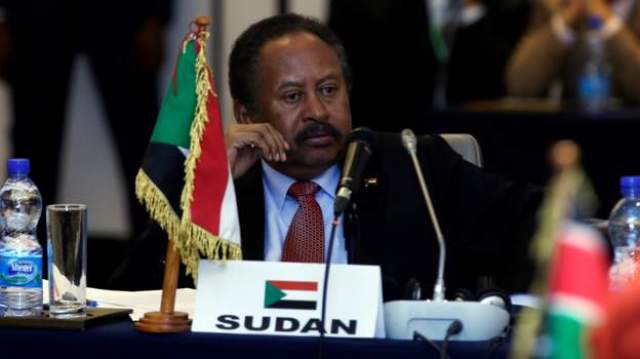
Sudan PM, Hamdok, survives assassination attempt


Sudanese Prime Minister Abdalla Hamdok


Sudan’s Prime Minister Abdalla Hamdok according to State Media report escaped an assassination attempt in the nation’s capital, Khartoum.

Statement released from the Prime Minister’s office reads in part, “An explosion hit as Prime Minister Abdalla Hamdok’s car was driving by but thank God no one was hurt,”

Members of Hamdok’s office confirmed to Al Jazeera that the prime minister had been moved to a safe location. in a safe place.
The blast targeted the prime minister’s convoy “just as he was heading to his office”, Al-Jazeera reports.

There was no immediate claim of responsibility.
Footage posted online showed two white vehicles used by Sudan’s top officials parked on a street, damaged with their widows broken. Another vehicle was badly damaged in the blast.
The Sudanese Prime Minister, Hamdok was appointed in August 2019 after pro-democracy protests forced the military to remove former ruler Omar al-Bashir.

Following months of negotiations, the military and the pro-democracy movement reached a power-sharing deal in August.
The deal established a joint military-civilian, 11-member sovereign council that will govern Sudan for the next three years.
Military generals remain the de facto rulers of the country and have shown little willingness to hand over power to the civilian-led administration.

The economist turned prime minister has pledged to work towards ending the country’s economic crisis and establishing peace.

Born in 1956 in south-central Kordofan province, Hamdok has more than 30 years of experience as an economist and senior policy analyst specialising in economic development across Africa.

Thanks for reading. Follow the page and Share it.
Rwanda Tightens Screening Measures On Arriving Travelers To Avert Coronavirus Outbreak


ByJean de la Croix Tabaro


Rwanda has taken further preventive measures against arriving travelers in regard to coronavirus which is yet to reach the country.

The instructions that were released by the Ministry of Health on Sunday mainly inform the general public and visitors coming to Rwanda, that the country has decided to roll out screening of Coronavirus – COVID-19 at all country’s points of entry (POE).
“All travelers arriving in Rwanda at all points of entry will be screened,” reads the first point on the list.

Results of screening, will lead to further stages.

Thus, according to the communiqué, all travelers presenting one of the COVID – 19 symptoms and  coming from countries with confirmed cases of COVID-19 will be considered suspect  cases and therefore, will be taken to isolation at nearest hospital for more investigation and laboratory testing procedures.

In case the suspected cases are tested positive, they will become confirmed and sent immediately to COVID-19 treatment centre.
Even if they test negative, the suspected cases will not just be abandoned. Suspect cases remain eligible for active follow up.

“He/she is advised to provide a full identification for continued daily monitoring at place of self-quarantine for 14 days counted from the day she left a country with confirmed COVID-19 cases.”

This point further reads that the location of suspect cases should be accessible for monitoring team of Ministry of Health and Rwanda Biomedical Centre(RBC).

The Ministry of health recommends that suspect- cases in self-quarantine should always wear masks, self-isolate from others in the same household and call 114 for further direction.

The Ministry of Health further says that any asymptomatic traveler coming from a country with confirmed cases of COVID-19 cases will be considered as at risk and will be recorded in a register and electronic tools for continued daily monitoring for 14 days counted from the day he/she left country with COVID-19 confirmed cases.
These instructions were endorsed by Minister of Health Dr. Daniel Ngamije.

They came a couple of hours after the city of Kigali suspended entertainments and big gathering in the city, in efforts to avoid outbreak of coronavirus in Rwanda.

The country is also strengthening hygiene measures in public spaces as a preventive move.

Rwanda has so far reported no case.

Thanks for reading. Follow the page and Share it.

Saturday, March 7, 2020

Kenya-Somali row: Will the Peace last?


By Basillioh Mutahi

Somali's national army battled Jubbaland forces at the border with Kenya

Hundreds of residents of Mandera in north-eastern Kenya near Somalia have fled the area in the aftermath of clashes between warring troops across the border.

This comes a day after the Kenyan and Somali presidents spoke by phone and agreed to resolve the escalating tensions between the two countries.

President Uhuru Kenyatta and his counterpart Mohamed Abdullahi "Farmaajo" spoke on Thursday, after the Kenyan leader accused Somalia of an "unwarranted attack" on its territory.

The Kenyan president was referring to clashes between Somali government forces and its regional troops in Bula Hawa, which spilled across the border into Mandera.

He warned Somalia to stop provoking Kenya by violating its territorial integrity, saying the Somali army had fought on Kenyan land, creating tension and harassing residents.

A week ago, Somalia accused Kenya of meddling in its internal affairs and warned it to stop its encroachment in the border areas. Kenya denied the claims as "baseless and invalid".

The two leaders have now agreed to work together to improve border security, and form two committees drawn from both countries to look into strengthening diplomatic and trade relations.

According to a statement from Somalia's presidential team, the committees would also look into strengthening diplomatic and trade relations.

Will the calm last?


Dr Hassan Khannenje, the director of the the Horn International Institute of Strategic Studies in Nairobi, says while the call was an attempt to de-escalate the situation, the calm is unlikely to last.
The leaders of Somalia and Kenya agreed to resolve tensions between the two countries

Dr Khannenje says that while the situation may calm down for now, it could blow up again at any time, especially because of the ongoing maritime boundary dispute.

He also says the fundamental political issues in Somalia, including the al-Shabab question, will not be resolved any time soon.
In the meantime, tension remains high along the border, with the warring troops still present.

So what are the issues that have soured Somalia's relations with Kenya in recent times?

The maritime dispute


The two countries have been locked in a long-running dispute over sovereignty of an oil-rich area in the Indian Ocean, 
Both countries claim the area - thought to contain large deposits of oil and gas.

Kenya has argued the sea border should be drawn parallel to the line of latitude, while Somalia saying it should be extended in the same direction as its land border.

The two were unable to settle the matter out of court, ultimately referring the matter to the International Court of Justice (ICJ), which Mr Mohamed insisted should be the ultimate arbiter.

Kenya had favoured a negotiated settlement, arguing the court system would not address the political issues around the case.

The international court is expected to rule on the maritime dispute in June.

The al-Shabab threat


The political and security situation in Somalia has also played a role in escalating the diplomatic row between the two countries.
Somalia has experienced almost constant conflict since the collapse of its central government in 1991. 

The government in Mogadishu has been unable to exert much control over the regional governments, which run almost autonomously.
Al-Shabab, which has links to al-Qaeda, remains active in many rural areas.


Kenya is one of several countries to have deployed troops as part of the African Union Mission in Somalia (Amisom), which is helping the Somali government battle al-Shabab.

But al-Shabab continues to carry out attacks in both the country and its neighbours, including Kenya.

At least 80 people died in a bomb blast in December in Mogadishu and there have been other deadly attacks since then.

The Somali government has been accused of spending too much on disputes with regional governments in Jubbaland, Puntland, South West and Galmudug, rather than tackling the threat from al-Shabab.

Who does Kenya support in Somalia?


Kenya backs the administration of Ahmed Mohamed Islam better known as "Madobe" in Jubbaland, because of its own security and regional interests.

Kenya has its troops under Amisom deployed in Jubbaland together with Ethiopia, and has been keen to have the region, which stretches right along its 700km- (430 mile) border with Somalia, as a buffer zone against al-Shabab.

Kenya supports the administration of Ahmed "Madobe" in Jubbaland

Last year, Mr Madobe was supported by Kenya to win his election bid as the regional president, against opposition from President Mohamed and Ethiopia.

The Somali government then imposed air travel restrictions between Kismayo, Jubbaland's biggest city, and Mogadishu, which badly affected business in the state, as ground transport is unsafe because of al-Shabab.

Somalia's leader has a close interest in who is in power in the states, as they determine the people who pick the MPs from the state, who in turn elect the president.

This may change as Mr Mohamed recently signed a historic law that paves the way for the country to hold its first one-person-one vote election in half a century, although this may not be possible in all areas because of the security situation.

The wanted minister


The latest clashes in Mandera come against a background of simmering tensions between the two countries.

In the latest incident, Somalia accused Kenya of harbouring Jubbaland security minister Abdirashid Janan Hassan Abdinur, who is said to have escaped from a Mogadishu prison on 28 January. 

The regional minister, who is accused of committing grave human rights violations and killing civilians in Gedo, Somalia, had been in detention for four months awaiting trial.

Many residents of Mandera have fled the area after the attack

Amnesty International had asked Kenyan authorities to "immediately arrest and hand him over to the Federal Government of Somalia".
Amnesty also accused the Jubbaland administration of shielding him from facing justice.

"The Jubaland administration, including President Ahmed Mohamed Islam, who has repeatedly called for Abdirashid's release from detention, must desist from shielding him from facing justice upon his return," it said. 

So this week the Somali government deployed contingents of troops from Mogadishu at the border near Mandera town in Kenya, where the minister was said to be hiding.

It prompted the face-off with a militia group loyal to the minister and Jubbaland troops who were protecting him.
For now, the presidential phone call seems to have de-escalated the situation.

But it is far from clear whether it has resolved the many outstanding issues between the two neighbours.

Source: BBC Kenya 

Thanks for reading. Follow the page and Share it.

Ansah says current MEC to administer Malawi fresh elections


By Owen Khamula

will run the fresh elections with current ‘incompetent’ MEC

Malawi Electoral Commission (MEC) chairperson Jane Ansah has told a local television that the current commissioners will administer the Constitutional Court sanctioned May 19 presidential election.

Her comments come as rights activists, the Human Rights Defenders Coalition (HRDC) are organising what they call five million protester demonstration to shut down all state residences to force President Peter Mutharika fire the commissioners.

Ansah, a judge of the Malawi Supreme Court of Appeal, who scores of Malawians have also been demonstrating against her continued stay in office, told Rainbow Television that the commissioners will soon launch the electoral calendar for the fresh election slated for 19th May.
She maintain that she  would only resign if the Supreme Court upholds the February 3 2020 Constitutional Court judgement that nullified the May 21 2019 presidential election for massive irregularities.

Her stand comes hot of the heals of recommendations by  Members of Parliament’s Public Appointments Committee (PAC) for the  dismissal of MEC commissioners—including embattled chairperson Ansah—for alleged incompetence and mismanagement of the May 21 2019 Tripartite Elections, it has emerged.

PAC made the resolution of the public inquiry that assessed the competences of MEC members as ordered by the Constitutional Court on February 3.

The Constitutional Court declared the commissioners incompetent in the discharge of their duties of  managing elections and ordered PAC to conduct hearings to assess if they are up to the task ahead of a presidential election rerun by July 2.

But Ansah has since said the current MEC is all set to organise the fresh polls

During the television interview, Ansah said the commission has a deficit but was quick to say they are working with Treasury and development partners to help provide the deficit.

She has also assured the nation that they will run the fresh presidential election within the stipulated time, a departure from their earlier plan to have additional days.

NICE Public Trust Executive Director Ollen Mwalubunju and the Malawi Electoral Support Network – MESN Chairperson Steve Duwa, separately on Thursday that there is now nothing they can do on civic and voter eduction following absence of the electoral calendar
MEC commissioners include  Ansah, Mary Nkosi, Elvey Mtafu, Moffat Banda, Yahaya M’madi, Linda Kunje, Jean Mathanga,  the Reverend Clifford Baloyi and the Reverend Killion Mgawi.

Thanks for reading. Follow the page and Share it.

Monday, March 2, 2020

Tanzanian Bishop appeals for flood relief


The Bishop of Lindi has asked for help from “all people of good will.”


By Fr John Waters

As the flooding in Tanzania continues, the Bishop of Lindi, one of the most affected areas of the country, has put out an appeal for disaster relief. Torrential rain has caused flooding in the South-Eastern region of Tanzania since the end of January.

Bishop Bruno Pius Ngonyani has called on local caritas groups, state authorities, non-governmental organizations (NGOs) and “all people of good will” to help those affected by the flooding. His appeal echoes another which was made by the Tanzanian Prime Minister’s disaster relief team, who called for more donations of money and resources as the crisis continued. At least 21 people have died as a result of the floods, with a further 21,000 people having been displaced.

Relief efforts are being hampered by the fact that rain is still ongoing in some of the worst affected areas. A number of road bridges have also been damaged by the floods waters, leaving some areas only accessible by helicopter. In January one national disaster management team said that the situation had left them overstretched and under-resourced.

Many schools have been closed to their pupils and are instead being used as shelters for those made homeless. Makeshift hospitals and healthcare facilities are also often based in these converted school buildings.

Up to 495 acres of farmland have also been destroyed by the floods, leaving many people without food supplies.  

Thanks for reading. Follow the page and Share it.