Saturday, February 8, 2020

U.S. awaits China’s approval to send in experts as part of WHO team


U.S. experts on infectious diseases, including government officials, are awaiting approval to enter China to help fight the coronavirus epidemic, having been included on a list proposed by the World Health Organization, a U.S. embassy spokesman told Reuters on Saturday.

China agreed to allow WHO to form a team of experts to travel to China to learn about the virus and find solutions to the outbreak, the spokesman said.

“The United States appreciates China’s efforts and continued coordination with public health officials across the globe,” he said in an e-mailed statement.

“These U.S. experts have extensive experience working with the World Health Organization on a range of infectious disease outbreaks and epidemics including Ebola, avian influenza, and SARS,” he added.

A WHO source in Geneva said that the agency was waiting to hear back from China on the proposed team, while a WHO spokesman said on Saturday he had no further update on the mission.

China’s foreign ministry said in a statement that it understood that the National Health Commission was in close communication with WHO on the specific arrangements for the team’s visit to China.

Thanks for reading. Follow the page and Share it.

French soldiers kill more than 30 Islamist militants in Mali: army


French soldiers killed more than 30 Islamist militants in Mali in three separate operations on Thursday and Friday targeting al Qaeda and Islamic State-linked groups, France’s armed forces said.

France, the former colonial power in a number of West African countries, has about 4,500 soldiers in the region in its counter-terrorism taskforce Operation Barkhane. The United Nations has a 13,000-strong peacekeeping operation in Mali.

In the Gourma region, soldiers of the French Barkhane force killed about 20 militants and destroyed several vehicles, while in the Liptako region, a stronghold of Islamic State, 10 more were killed, the army said.

The operations involved a drone, warplanes, and two helicopters, it said.

In December, French forces killed 33 Islamist militants in Mali using attack helicopters, ground troops and a drone near the border with Mauritania where a group linked to al Qaeda operates.

On Sunday, France said it planned to deploy 600 more soldiers in the fight against militants in the Sahel, an arid region of West Africa south of the Sahara desert. The reinforcements would mostly be sent to the area between Mali, Burkina Faso, and Niger.

The United Nations, France, and the United States have poured billions of dollars into stabilizing the Sahel, but with little success.

Thanks for reading. Follow the page and Share it.

Thursday, February 6, 2020

South African court issues Jacob Zuma arrest warrant in corruption trial, rejects former president's 'sick note'


Former South African president Jacob Zuma's lawyer presented a sick note to the court.(Reuters: Mike Hutchings)

A South African court has issued an arrest warrant for former president Jacob Zuma, after he skipped court on grounds of needing medical treatment, before the warrant was stayed until his corruption trial resumes on May 6.

Mr Zuma's lawyer presented the judge with a sick note from what he said was a military hospital, but Judge Dhaya Pillay questioned whether the note was valid, as there was no medical number showing if and where the doctor was certified.

"I don't even know if [he] … is a doctor. There is … nothing to suggest that he is," she said, before issuing the warrant.

The former leader is on trial on 18 charges of fraud, racketeering and money laundering relating to a $2 billion arms deal with French defence firm Thales in 1999, when Mr Zuma was deputy president.
He rejects the allegations as a politically motivated witch-hunt.

Dan Mantsha, Mr Zuma's lawyer, said that Mr Zuma was abroad for medical treatment, without saying where. Local media have suggested he is in Cuba, although it was not immediately possible to verify this.
Ms Pillay concluded that the note was insufficient to excuse Mr Zuma from appearing for the trial, but gave him until it resumes on May 6 to turn up before the warrant kicks in.

Mr Zuma, president from 2009—2018, had previously applied for a permanent stay of prosecution but the court in Pietermaritzburg threw out his appeal in November.

He is accused of accepting 500,000 rand ($50,253) annually from Thales in 1999, in exchange for protecting the company from an investigation into the deal.

Thales, known as Thompson-CSF at the time, has said it had no knowledge of any transgressions by any of its employees in relation to the award of the contracts.

The National Prosecuting Authority initially filed the charges against Mr Zuma a decade ago but set them aside shortly before he successfully ran for president in 2009.


Ms Pillay also accepted an application by the company on Tuesday to be represented by lawyer Barry Roux, who defended Paralympian athlete Oscar Pistorius over the 2013 murder of his girlfriend.

Thanks for reading. Follow the page and Share it.

CORONAVIRUS: No effective treatment found — WHO


The World Health Organisation has played down media reports of “breakthrough” drugs being discovered to treat people infected with the new coronavirus.

A Chinese TV report said researchers at Zhejiang University had found an effective drug for the virus, while Britain’s Sky News said researchers had made a “significant breakthrough” in developing a vaccine. Oil prices jumped on the reports.

The WHO spokesman Tarik Jasarevic said: “There is no known effective therapeutics against this 2019-nCoV (virus) and the WHO recommends enrolment into a randomised controlled trial to test efficacy and safety.”

The process of developing and testing drugs or vaccines against a new pathogen normally takes many years and is often fraught with pitfalls and failures.

Even at the accelerated pace enabled by new technologies, the earliest that scientists hope to be able to start initial human trials of a new coronavirus vaccine is by June this year.

Doctors looking for ways to treat patients infected with the new coronavirus are likely to try antiviral medicines licensed for use against other viral infections to see if they might help, as well as potential antiviral drugs still in development.

Wednesday, February 5, 2020

Pregnant women may pass coronavirus to unborn children


By Sola Ogundipe


Pregnant women infected with the new coronavirus may be able to pass it to their unborn children, doctors at the Wuhan Children Hospital said on Wednesday, according to state broadcaster CCTV.

The doctors said it was possible after an infected coronavirus patient gave birth to a baby on Feb. 2. The newborn was given a test 30 hours later and confirmed to have the virus, the doctors said.

The newborn has stable vital signs and no fever or cough, but was experiencing shortness of breath, the doctors said. Chest x-rays showed signs of infection and there were some abnormalities in liver functions.

“This reminds us to pay attention to mother-to-child being a possible route of coronavirus transmission,” said the chief physician of Wuhan Children Hospital’s neonatal medicine department, Zeng Lingkong.

The hospital also disclosed details of a second case involving an infant who was born healthy on Jan. 13. The baby’s nanny was later diagnosed with the virus and the mother days later. The baby started showing symptoms on Jan 29.

“Whether it was the baby’s nanny who passed to the virus to the mother who passed it to the baby, we cannot be sure at the moment. But we can confirm that the baby was in close contact with patients infected with the new coronavirus, which says newborns can also be infected,” Zeng said.

Thanks for reading. Follow the page and Share it.

BREAKING: Trump survives impeachment as Senate acquits US President


US President, Donal Trump is off the impeachement hook.
US Senators on Wednesday voted that he was not guilty of abuse of power. The vote was 52-48.

Sen. Mitt Romney was the only Republican to vote to convict Trump.
Romney entered history books as the first senator in US history to vote to convict a president from the same party in an impeachment trial.

Democrats had wanted Trump out of office and impeach him at the House.

They accused him of asking Ukraine to dig up dirt on his political rival, Joe Biden, and withholding military aid as pressure.

The US president was also alleged to have obstructed Congress’ investigation of the affair.

Trump repeated accused the Democrats of trying to reverse his 2016 election election victory.

Thanks for reading. Follow the page and Share it.

More Chinese cities shut down as virus death toll rises


Millions of people have been ordered to stay indoors as China battles to curb the spread of a new virus that authorities said Wednesday has already killed nearly 500 people.

With more than 24,000 cases in China, a growing number of cities have been imposing a range of restrictions in recent days far from central Hubei province, the epicentre of the outbreak, as authorities struggle to contain the virus.

Global concerns have risen as more countries found cases that were not imported from China and 10 people tested positive for the virus on a ship quarantined off the coast of Japan.

Some 56 million people in Hubei have been under virtual lockdown since last week, with its capital Wuhan at the heart of the health emergency.

In Hangzhou, some 175 kilometres (110 miles) southwest of Shanghai, green fences blocked streets near the headquarters of Chinese tech giant Alibaba as a fighter jet circled overhead.

Alibaba, one of the world’s most valuable companies, appeared shut down, while deliverymen moved in and out of the nearby fenced-in residential areas to drop off groceries. Many people were also seen going out.
The firm is inside one of three districts where some three million people were told this week that only one person per household would be allowed outside every two days to buy necessities.

“Please don’t go out, don’t go out, don’t go out!” blared a message on a loudspeaker urging people to wear masks, wash their hands regularly and report any people who are from Hubei — a common fear in other parts of the country that people from the province might infect others.

At least three other cities in eastern Zhejiang province — Taizhou, Wenzhou and parts of Ningbo — have imposed the same measures, affecting some 18 million people.

Similar policies were encouraged by authorities in two cities as far as China’s northeasternmost province, Heilongjiang, and a handful of others along the east coast.
In Henan province, which borders Hubei, a district in the city of Zhumadian decided that only one person could leave each household every five days. Residents there have been offered cash rewards for informing on people from Hubei.

— Global jitters –

The disease is believed to have emerged in December in a Wuhan market that sold wild animals, and spread rapidly as people travelled for the Lunar New Year holiday in January.
The death toll has steadily increased, rising to 490 in China after Hubei reported 65 more people had died.

Most deaths have been in the province and officials have noted that the death rate, at around two percent, is below the mortality rate of the Severe Acute Respiratory Syndrome.

The new coronavirus is from the same family of pathogens as the one that causes SARS, which killed some 800 people in 2002-2003.

The epidemic has prompted the World Health Organization (WHO) to declare a global health emergency, several governments to institute travel restrictions, and airlines to suspend flights to and from China.
United and American Airlines said Wednesday they have added Hong Kong to their China flight suspensions.

On Wednesday Japan said at least 10 passengers on a cruise ship carrying 3,711 people have the virus.

apanese authorities began testing those on board after a former passenger who disembarked in Hong Kong was diagnosed with the illness.

British Foreign Secretary Dominic Raab on Tuesday advised Britons to leave China “if they can”, to minimise their risk of exposure to the virus.

– ‘Window of opportunity’ –

But the WHO said Tuesday that dramatic measures taken by China offered a chance to halt transmission.
WHO chief Tedros Adhanom Ghebreyesus said that the great majority of cases are in China.

“That doesn’t mean that it won’t get worse. But for sure we have a window of opportunity to act,” he said.
Singapore, Malaysia, and Thailand all reported new infections not imported from China on Tuesday.

Two fatalities have been reported outside the mainland, in Hong Kong and the Philippines.

Semi-autonomous Hong Kong has closed all but two land crossings with the Chinese mainland.

As countries battle to keep the virus off their shores, the WHO chief accused wealthy countries of falling short on their duties in sharing data.

“Of the 176 cases reported outside China so far, WHO has received complete case report forms for only 38 percent,” he said.

AFP


Thanks for reading. Follow the page and Share it.

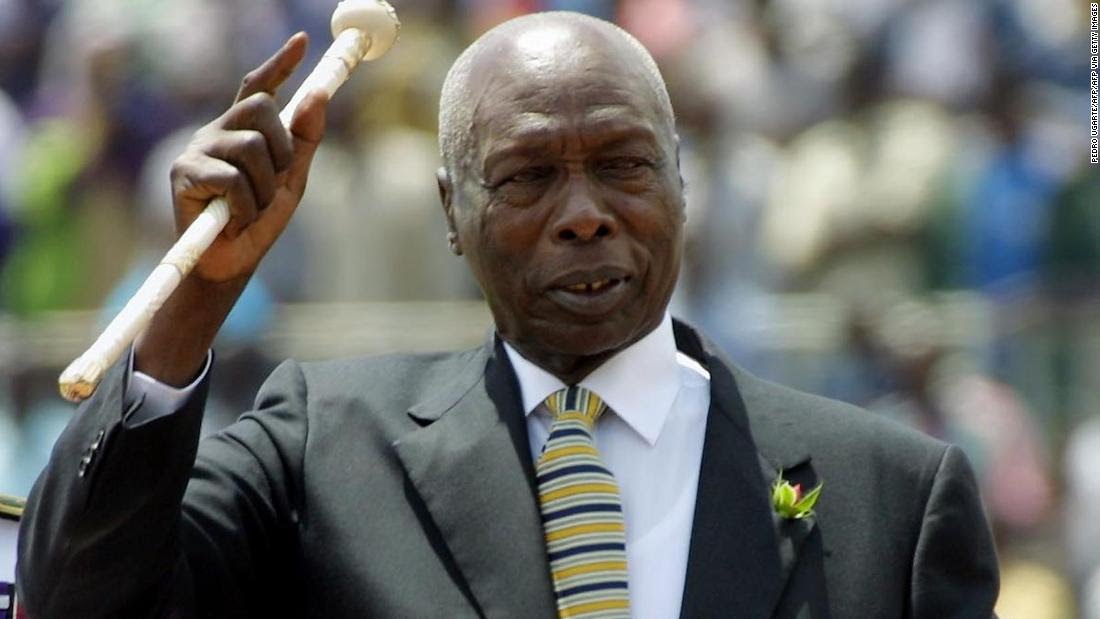
Kenya's longest serving President Daniel Arap Moi dies at 95


By Kagweni Micheni and Farai Sevenzo

Daniel Arap Moi

Nairobi, Kenya

Former Kenyan President Daniel Arap Moi, who ruled the country for 24 years, has died, President Uhuru Kenyatta announced Tuesday. Moi was 95.

"It is with profound sadness that I announce the death of a great man of an African state," Kenyatta said in a statement.
He ordered him a period of national mourning and all flags to fly at half-staff until a state funeral is held at a later date.

Moi died at a hospital in the early hours of Tuesday morning surrounded by his family, Kenyatta said. 

He had been hospitalized in October for breathing problems but was discharged after a few weeks. 

An autocratic rule

Moi was born September 2, 1924, in Baringo County. He became Kenya's second president after independence and went on to rule from 1978 to 2002. 

His wily grasp of power earned him the nickname "Professor of Politics" amongst Kenyans. 

His 24 years in power encompassed one-party rule through the Kenyan African National Union, the party he controlled, and also the reintroduction of democracy and multiparty politics, which culminated in his victory in the 1992 Presidential elections. 

Educated at missionary and government schools, Moi became a teacher as Kenya was moving towards independence from British rule. 
He became the Minister of Home Affairs and President Jomo Kenyatta later named him Vice President in 1967. 

Moi became Kenya's leader after Jomo Kenyatta's death in 1978, bringing in an era of autocratic and at times dictatorial rule that made Moi and his family extremely wealthy. 

After he stepped down, Kenya located more than $1 billion of public money stashed in overseas offshore accounts, which it sought to recover, the New York Times reported. 

Quashing rebellion 

Four years after Moi came to power, some members of the Air Force attempted a coup, which Moi successfully and ruthlessly crushed.
After the attempt, Moi's rule became more hard-nosed -- he dismissed political opponents and reduced the influence of his predecessor's allies in his cabinet. 

He went on to change the constitution, making his KANU party the only legally permitted political entity and triggering the wrath of many Kenyans who sought democracy. 

Pressure from Western backers forced Moi back onto the democratic path in 1990 and he was compelled to allow opposition parties onto the ballot before the 1992 general elections -- Kenya's first multi-party elections -- which Moi won, despite allegations of electoral fraud by his party.


Widespread influence 

As a statesman Moi had widespread influence in cementing East African countries like Uganda and Tanzania into a coherent trading block. On March 14, 1996, full East African Cooperation efforts began and in July 1999 the new East African Community was born. 

He also rallied to the cause of anti-apartheid in southern Africa, sending Kenyan soldiers into pre-independence Zimbabwe as peacekeepers during the ceasefire there in 1979. 

While he was the Chairman of the Organization of African Unity, Moi was involved in securing peace in Chad. In Sudan, Moi chaired the talks that led to a referendum that ended a three-decade war in South Sudan and the creation of a new nation in July 2011. 

With 24 years at the helm of Kenya's government, Moi had a massive impact in shaping Kenya's politics and governmental structures. Subsequent presidents, Mwai Kibaki and Uhuru Kenyatta, can be said to have been appointed by the elder statesman. 

He appointed Kibaki as his Vice President and paved the way for him to later lead Kenya. He then plucked a largely unknown and untested Kenyatta from relative obscurity and pushed him to the forefront of Kenyan politics. 

As a former teacher, Moi's legacy also included a wide expansion of higher education. It was during the Moi era that the university sector grew starting with the opening of Kenya's second university in Eldoret, a town in the north. 

Other universities followed, including private educational institutions run by Methodists. Today Kenya has more than 60 universities and public university colleges.


Thanks for reading. Follow the page and Share it.

Iran Upholds Death Sentence For Man Accused Of Giving Nuclear Secrets To CIA


By Bill Chappel

 
Iranian judiciary spokesman Gholamhossein Esmaili says that an Iranian man named Amir Rahimpour will be executed for spying on behalf of the CIA and that the sentence and would be carried out soon.
Hamed Ataei/Mizan News Agency via AP


Iran's Supreme Court has affirmed a death sentence for a man accused of giving secrets about the country's nuclear program to the CIA, a government spokesman announced Tuesday.

"Amir Rahimpour who spied for the CIA and received huge amounts of money and attempted to provide the U.S. intelligence service with a part of Iran's nuclear information was tried and had been sentenced to death," judiciary spokesman Gholam Hossein Esmayeeli said at a news conference in Tehran, according to Iran's semiofficial FARS News Agency.

Esmayeeli said the sentence will be carried out "soon" but did not provide an exact date or any other details.
"It's the first Iranian death sentence for spying on behalf of America in nearly a decade," NPR's Peter Kenyon reports from Istanbul.

Rahimpour holds a master's degree in electrical engineering and has been incarcerated in Evin Prison since at least last fall, according to the Human Rights Activists News Agency in Iran. Evin Prison is notorious for holding political detainees, including Washington Post journalist Jason Rezaian, who was held there for 544 days.

The public announcement is the latest salvo in Iran's dispute with the United States, which ratcheted up after President Trump abandoned an international nuclear deal and reimposed sanctions on Iran in 2018. Last month, a U.S. drone strike killed a top Iranian commander and Iran retaliated with missile strikes against Iraqi bases housing American personnel.

Iran has made numerous claims of counterintelligence coups against the U.S. in recent years.

Last April, Intelligence Minister Mahmoud Alavi announced that his agency had disrupted CIA operations by identifying 290 spies operating in Iran and other countries. He said Iran had shared that information with other nations. And last June, Iran said it "dismantled" a CIA espionage network – a claim that a U.S. official denied.

Last July, Iran's Intelligence Ministry said it had detained 17 Iranians, accusing them of spying for the U.S. Trump said the announcement was "totally false."

In announcing Rahimpour's death sentence, the Iranian judiciary spokesman added that two other Iranians also have been punished for espionage, according to the official Islamic Republic News Agency.

"They did their spying activities in form of charity organizations; they were sentenced to 10 years of imprisonment for espionage and another five years for acting against security," IRNA reports.

Thanks for reading. Follow the page and Share it.

Boko Haram: US announces additional N14.5bn aid to Nigeria


The United States has announced an additional $40million (N14 billion) aid to Nigeria as to address the humanitarian crisis caused by the Boko Haram insurgency.


US Secretary of State, Mike Pompeo, made the announcement in Washington DC on Tuesday.

Pompeo spoke during a joint media briefing with the Minister of Foreign Affairs, Geoffrey Onyeama, after the U.S.-Nigeria Binational Commission (BNC) meeting hosted by the Department of State.

“The foreign minister (Onyeama) and I also discussed today the massive humanitarian crisis that the conflict with Boko Haram and ISIS-West Africa and other religious and ethnic violence.

“We know that these issues are hard. We know that they’re complicated.
“But I strongly encouraged the Nigerian government to do more to protect its civilians, including religious communities and the humanitarian organisations seeking to assist them.

“To aid in this effort, I’m pleased to announce today an additional 40 million dollars in humanitarian assistance to Nigeria, adding to the nearly 350 million dollars that we provided last year,’’ he said.

Pompeo disclosed that the two-day meeting also featured discussions on security cooperation between both countries, especially Nigeria’s “recent purchase’’ of 12 U.S.-made A-29 fighter planes worth 500 million dollars.
Onyeama, in his remarks, said: “Of course, we are faced with other security issues within Nigeria, and we know that some of them cause disquiet amongst our partners and we are addressing a number of those.

“And in addressing those internal challenges, and especially in the security area, we absolutely make it clear and strive to uphold human rights.

“We have the greatest interest in protecting and respecting the human rights of our population and we do that.”

Thanks for reading. Follow the page and Share it.

UPDATED: US optimistic on lifting Nigeria visa ban, says Pompeo


The United States and Nigeria voiced hope Tuesday that the Trump administration would soon lift onerous visa restrictions slapped on Africa’s most populous country, which said it was “blindsided” by its ally.

On a previously scheduled visit to Washington, Nigerian Foreign Minister Geoffrey Onyeama said he sought more information on President Donald Trump’s latest immigration crackdown announced last week which targeted Nigeria and five other countries.

Secretary of State Mike Pompeo, meeting Onyeama, said that Trump took action partly due to the “terrorism threat” in West Africa, where Nigeria has fought alongside the United States against Islamist extremists.

Nigeria remains a “strategic partner” but Trump restricted visas as it has “room to grow in sharing important national security information.” 

“I’m optimistic that’s going to happen,” Pompeo told reporters.
Striking a diplomatic tone, Onyeama said his talks were “very gratifying” but acknowledged, with a smile, that Trump’s move caught Nigeria off-guard.

“We were somewhat blindsided by the announcement of the visa restrictions,” Onyeama said.

He said that Nigeria had already been looking to address US concerns, such as providing information on suspected terrorists and embedding electronic data into passports.

“We know, and the US officials have also confirmed, that we have been able to tick most of those boxes,” he said.
The lingering problem, he said, involved how to handle lost and stolen Nigerian passports.

He said Nigeria was putting in place a system that would make data from such passports “immediately available” to all members of Interpol, the global law enforcement body.

“We hope to have that up and running very soon,” he said. “Hopefully, once that has been achieved, we look forward to being taken off this visa restriction list.”

Trump came to office vowing to impose border restrictions and notoriously was quoted as using a vulgar epithet for African and other developing nations that send immigrants to the United States.
Unlike a controversial order days after he took office that essentially banned entry to citizens from a number of Muslim-majority countries, the latest restrictions primarily involve foreigners who seek to immigrate rather than visit.

Along with Nigeria, Trump imposed the curbs on nationals from Eritrea, Kyrgyzstan, Myanmar, Sudan and Tanzania.


AFP

Thanks for reading. Follow the page and Share it.

“If I marry you and I cheat, you have to forgive. If you cheat back the marriage is over” – Nigerian man tells his future wife


A Nigerian man has taken to his facebook page to warn his future wife of the consequence she’d face if she ever cheats on him.

Alex Uchenna said in a Facebook post that if he cheats on his future wife, he expects her to forgive him but if she cheats on him, that will be the end of their marriage.

His post reads ;

“If I marry you and I cheat on you, you have no choice than to forgive me but if you cheat back you will reach your father’s house. Note:- You can only cheat back when you’re the one who paid your own bride price, get the items in the annoying long list, pay the bills for your tradition and white wedding, rent the house, buy your own car, pay the bills and provide the foods in the house.”


Thanks for reading. Follow the page and Share it.